
The short answer
The NFPA 211 standard calls for chimneys, fireplaces and vents to be inspected once a year. You should book sooner if you notice smells, poor draft, debris or water in the firebox. Our certified technicians check the system from firebox to crown, use a camera where it fits, and explain what they find before any work is done.
A chimney inspection tells you whether your fireplace, wood stove or heating flue is safe to use and what needs attention. Many Brooklyn rowhouses and brownstones have older masonry chimneys that have been through years of freeze-thaw cycles, patch jobs and heating system changes. Cracked flue tiles, loose mortar or a blocked cap are usually invisible from the living room. NorthStar Chimney Services sends certified technicians to check the whole system, from the firebox to the crown, and explain what they find in plain terms. That way you know the chimney's condition before you light a fire or start the heating season.
Signs You Need a Chimney Inspection
A yearly inspection is the baseline, but some symptoms mean you shouldn't wait. If you notice any of these, stop using the fireplace or stove until a technician has looked at it.
- A smoky or tar-like creosote smell, especially on humid days or when the air conditioning is running
- Poor draft: smoke rolling into the room, or fires that are hard to start or die down quickly
- Bits of flue tile, mortar or brick flakes collecting in the firebox
- White, chalky staining on the brick inside or outside, a sign that moisture is moving through the masonry
- Scratching, chirping or fluttering noises in the chimney from birds, squirrels or raccoons
- Water or rust in the firebox, or damp stains on walls or ceilings near the chimney
What a Chimney Inspection Includes
Every inspection covers the parts of the system that can be reached without opening walls or removing components. You get a written summary of what we found, along with photos.
- Firebox: brick, mortar joints and the back wall, checked for cracks, gaps and heat damage
- Damper: whether it opens, closes and seals properly
- Smoke chamber and smoke shelf: buildup, debris and cracked parging
- Flue liner: cracks, gaps, missing mortar and creosote along its length
- Clearances to nearby wood framing and trim where they can be seen
- Chimney connector and vent pipe for wood stoves, inserts, boilers and furnaces
- Chimney crown, cap and spark arrestor
- Exterior masonry: spalling brick, open joints, and leaning or settling
- Flashing where the chimney meets the roof
- Signs of water entry, animal nesting and blockages
How Our Crew Works Inside Your Home and on the Roof
Inside, the technician lays drop cloths from the door to the fireplace and covers the hearth and nearby furniture. A HEPA vacuum runs during the work to keep soot and dust from drifting into the room. Sometimes the flue has so much buildup that it can't be properly seen. In that case we may recommend cleaning first, using rotary brushes that scrub the liner walls instead of just pushing debris down.
Where it fits, we lower a chimney camera through the liner. It records the condition of each tile joint and shows cracks that a flashlight can't reach. You can watch the footage on a screen with the technician and ask questions as it goes.
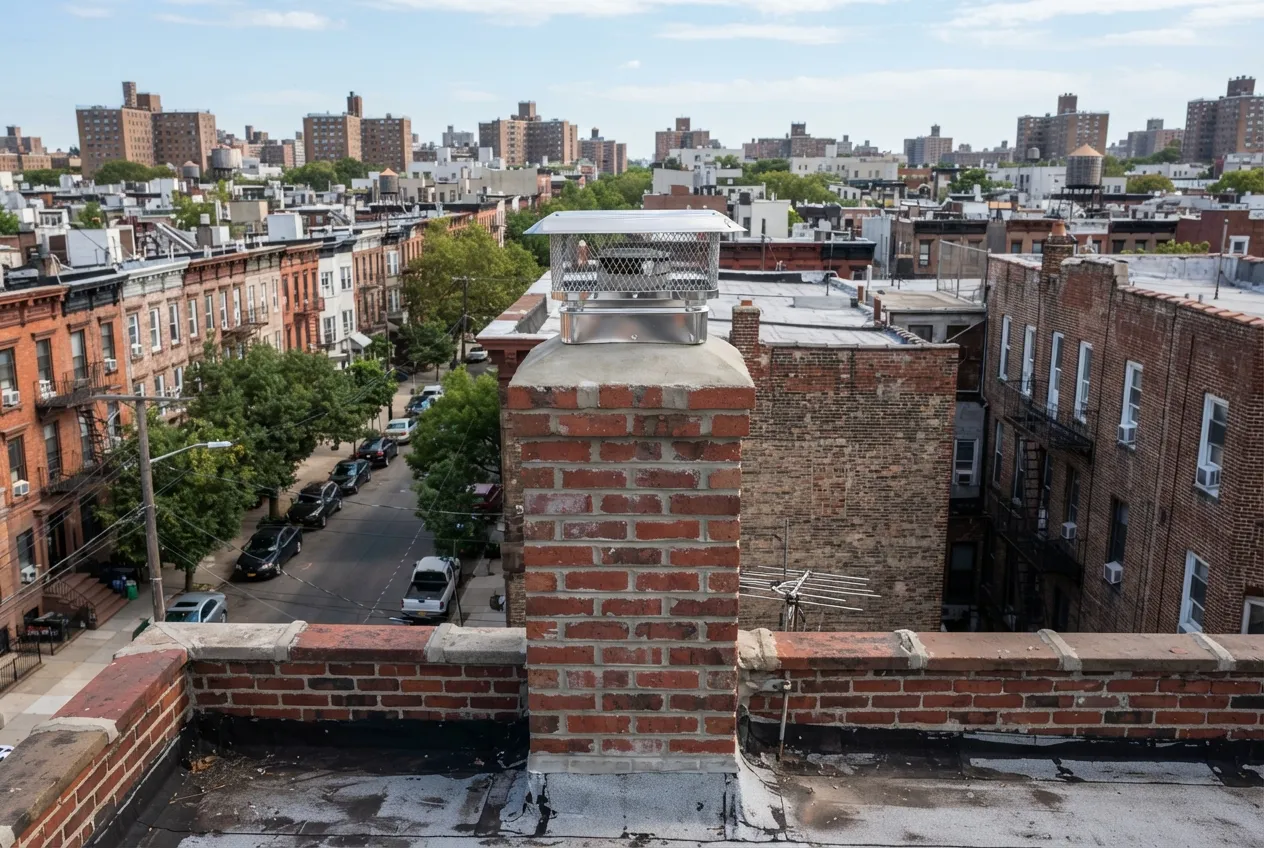
On the roof, the crew uses ladders and secure footing to reach the crown, cap and flashing. On attached rowhouses and brownstones, we check how the chimney sits next to the neighbor's stack and whether shared walls show water staining. If weather or access makes the roof unsafe to reach, we'll tell you and schedule a return visit for that part of the inspection.
The Standard We Follow
Our inspections follow NFPA 211, the national standard that calls for chimneys, fireplaces and vents to be inspected once a year. That applies whether you burn wood every weekend or the flue only serves a gas boiler in the basement.
Chimney professionals use three inspection levels. We'll tell you which one fits your situation:
Fuel changes matter in Brooklyn. When a building converts its boiler from oil to gas, the chimney has to be evaluated as part of the work. A new liner is often needed, because gas exhaust produces acidic condensate that can corrode a masonry flue. New York City's heat season runs from October 1 through May 31, so it makes sense to schedule the inspection before fall. That way any repair won't leave the building without heat.
- Level 1: nothing has changed with the system, and you use it the same way you always have
- Level 2: something has changed, such as a new appliance or a switch of fuel, or the home is being sold
- Level 3: a hidden hazard has to be reached by opening part of the chimney or the building
What Affects the Price
Every chimney is different, so we quote once we know what we're looking at. The main factors are listed below. We go over the scope with you before any work starts.
- The height of the chimney and how hard the roof is to reach
- Fuel type: wood, gas, oil, or several flues serving different appliances
- Flue size, the number of flues and the liner's condition
- How much creosote, soot or debris has built up
- Whether a camera inspection is needed, or a Level 2 or Level 3 inspection is called for
- Whether repairs are needed and whether they're done during the same visit
How a Visit Works
When you book, we ask about your type of home, what the chimney serves, how often you use it and any problems you've noticed. That helps us bring the right equipment and plan for roof access.
On the day of the visit, the technician walks through the home with you and sets up protection around the fireplace or appliance. They inspect inside first, then the roof. Afterward they go over the findings with you and show you the photos or camera footage. They'll explain what is urgent, what can wait and what is fine as it is. If cleaning or repairs are needed, we describe the options, and you decide how to proceed.
Chimney Inspection by city
- Chimney Inspection in Carroll GardensLocal service & repairs
- Chimney Inspection in Cobble HillLocal service & repairs
- Chimney Inspection in GowanusLocal service & repairs
- Chimney Inspection in Red HookLocal service & repairs
- Chimney Inspection in Brooklyn HeightsLocal service & repairs
- Chimney Inspection in Park SlopeLocal service & repairs
- Chimney Inspection in Downtown BrooklynLocal service & repairs
- Chimney Inspection in DUMBOLocal service & repairs
- Chimney Inspection in Boerum HillLocal service & repairs
- Chimney Inspection in Fort GreeneLocal service & repairs
- Chimney Inspection in Prospect HeightsLocal service & repairs
- Chimney Inspection in Financial DistrictLocal service & repairs