
The short answer
Dryer vent cleaning removes the lint that builds up between your dryer and the outside opening, so hot air can escape the way it should. According to the U.S. Fire Administration, failure to clean is the leading factor contributing to home dryer fires. Most households should have the vent checked about once a year, and sooner if drying times get longer.
Every load of laundry pushes lint, moisture and heat through your dryer vent, and some of that lint never makes it outside. It settles in the duct, at the bends and around the exterior hood, and over time it narrows the path the hot air has to take. In many Brooklyn homes, dryer vents run through tight closets, across basement ceilings or up to the roof of a row house, so they are often longer and harder to reach than people expect. NorthStar Chimney Services cleans dryer vents from the back of the dryer to the outside opening, checks that air is moving freely, and tells you plainly what we found. Here is what the work involves and what to expect when our certified technicians come to your home.
Signs you need it
Lint buildup usually shows up as small changes in how your dryer behaves before it becomes a serious problem. If you notice any of these, it's worth having the vent looked at. If you smell burning, stop using the dryer until the vent has been checked.
- Clothes need two or more cycles to dry, or come out hot but still damp
- The dryer, or the room it's in, gets unusually hot while running
- A burning or scorched smell when the dryer is on
- Lint collecting around the dryer door, behind the machine or at the outside vent
- The exterior flap barely opens, or stays shut, while the dryer runs
- Chirping, scratching or nesting material at the outside hood, a sign that birds or rodents have moved in
- Dust or lint blowing back into the laundry area
- The dryer shuts itself off partway through a cycle
What's included in a dryer vent cleaning
Every visit covers the full vent run, not just the lint trap or the first few feet behind the machine. A standard cleaning includes:
- Pulling the dryer out and inspecting the transition hose and its connections
- Disconnecting and cleaning the transition hose, and pointing out any section that is crushed, torn or made of material that traps lint
- Cleaning the entire duct from the dryer connection to the exterior termination with rotary brushes
- Capturing the dislodged lint with HEPA vacuums
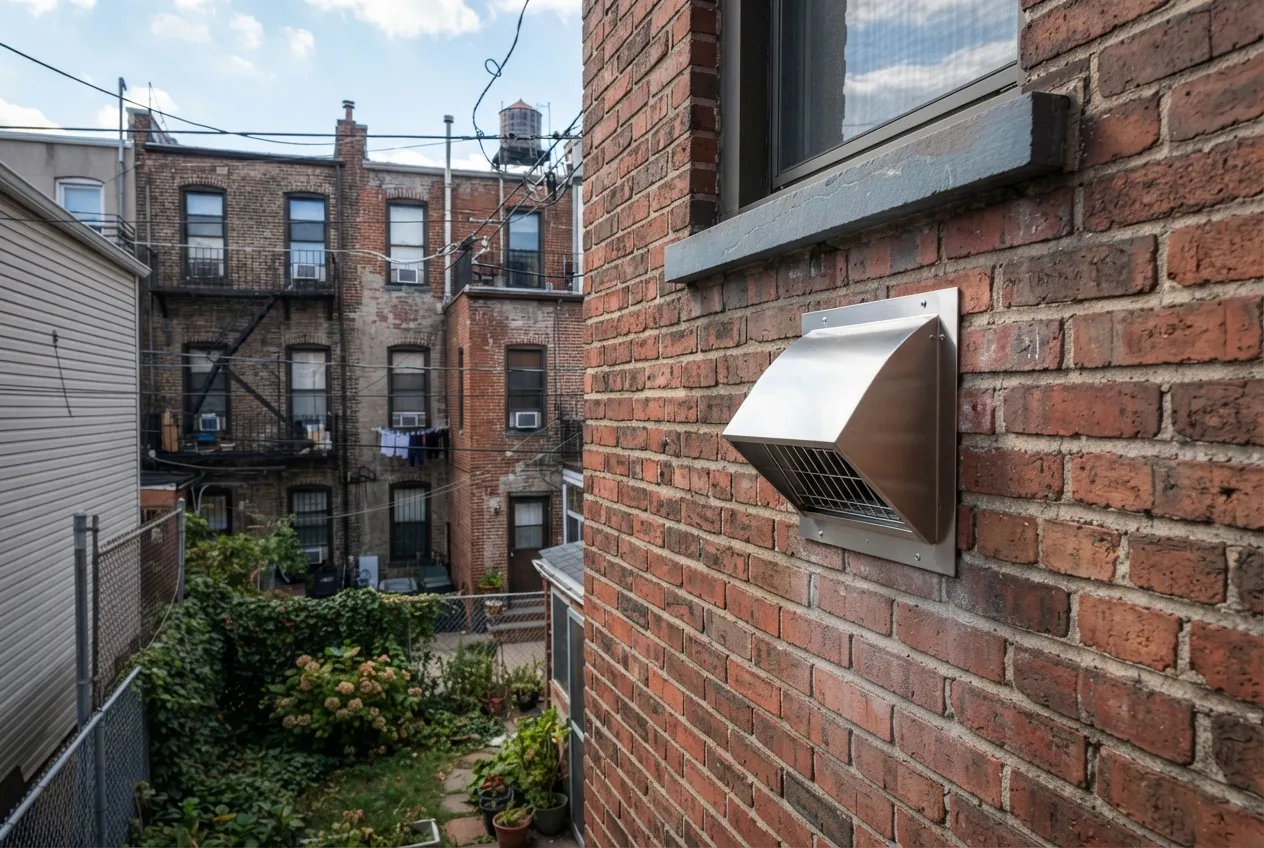
- Clearing the outside hood, flap or roof cap, including nests and debris
- Cleaning the lint trap housing where it can be reached
- Checking airflow at the outside opening before and after cleaning
- A camera inspection of hidden sections when buildup, damage or a blockage can't be confirmed by brushing alone
- Reconnecting the dryer, running it, and confirming air is leaving the building
- A walkthrough of what we found and anything that needs attention
How our crew works inside your home and on the roof
Inside, the crew lays drop cloths on the floor between the door and the laundry area before moving anything. We slide the dryer out carefully, disconnect it, and set up HEPA vacuums at the open end of the duct so lint is pulled away instead of spilling into the room. Rotary brushes on flexible rods are fed through the run to loosen packed lint at the bends and joints, where it tends to collect most. When part of the vent is hidden inside a wall or ceiling, we use a camera to see its condition rather than guess.
Many Brooklyn row houses and small multifamily buildings vent dryers through the roof instead of an outside wall. In those cases a technician works from the roof, clearing the cap and brushing down from the top while the crew inside collects the debris. Roof caps are a common spot for lint mats and bird nests, and screens can clog quickly. When we're done, we clean up the work area, push the dryer back into place, and run it to make sure everything is reconnected and working.
Why dryer vent cleaning matters
According to the U.S. Fire Administration, failure to clean is the leading factor contributing to clothes dryer fires in homes. Lint burns easily, and a clogged vent traps heat right where that lint sits. A restricted vent also makes the dryer run longer and work harder for every load.
There isn't a single fixed schedule that fits every home, but checking the vent about once a year is a sensible starting point. Large households, long vent runs, roof terminations and vents with several bends usually need attention more often. If you use a gas dryer, keeping the vent clear also matters because the vent carries combustion exhaust out of the house along with lint and moisture.
What affects the price
We quote each job after we understand the vent. The main things that affect the cost are:
- How long the vent run is and how many bends it has
- Where it exits: a ground-level wall vent, an upper-floor wall, or the roof, and how easy the roof is to reach
- How much lint has built up, and whether there are nests or other blockages
- Whether the dryer is gas or electric, since gas units need extra care when moved and reconnected
- The condition of the duct and whether any sections or the exterior hood need repair or replacement
- Whether a camera inspection is needed to see hidden sections
How a visit works
When you reach out, we'll ask where your dryer is, roughly where the vent exits, and what you've noticed. That helps us bring the right equipment and set a realistic time window. On the day of the visit, the crew confirms the plan with you, protects the floors, and checks airflow before starting.
After cleaning, we show you what came out of the vent, review any problems we found, and explain your options. If a repair is needed, we'll describe it plainly and quote it before doing any extra work. Most homes need nothing more than a cleaning, and we'll tell you if that's the case.