
The short answer
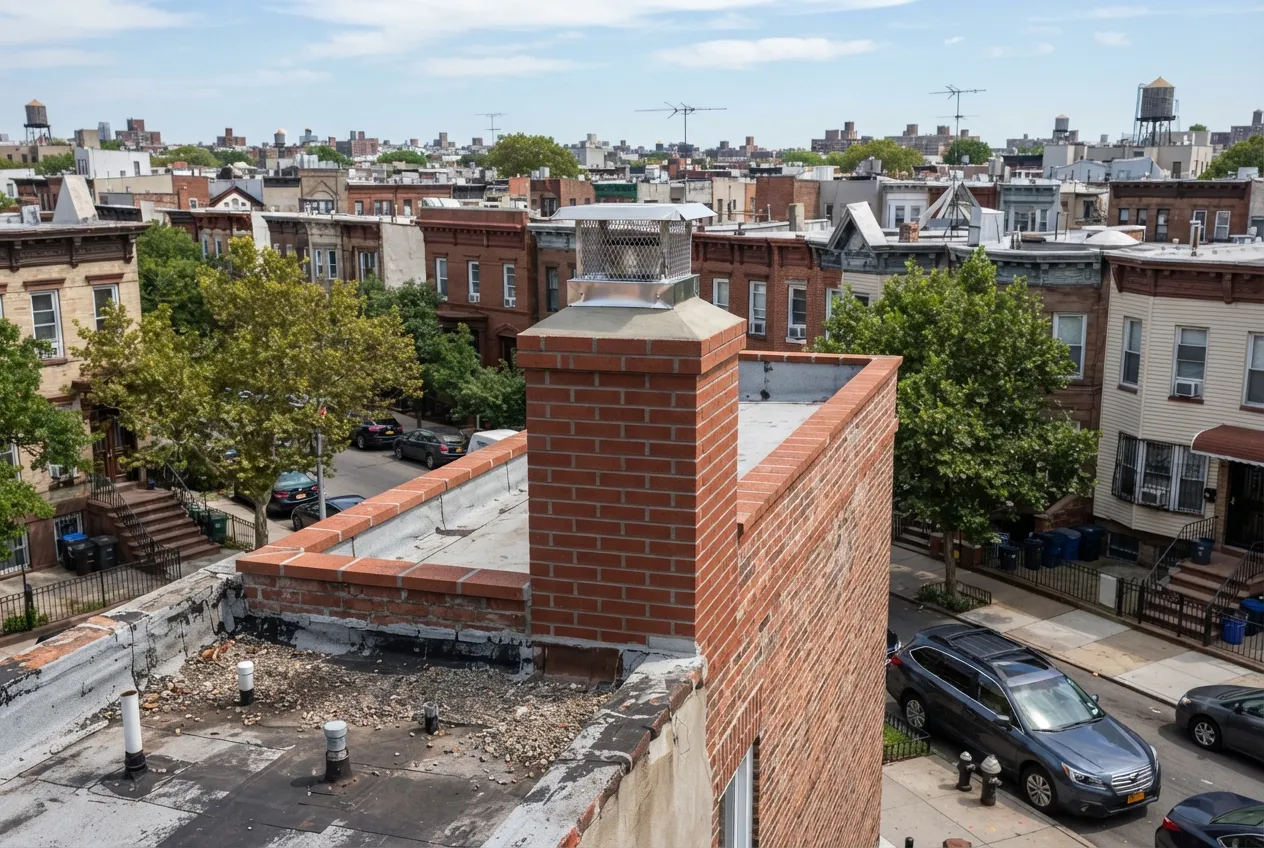
You need a chimney rebuild when bricks are crumbling, loose or leaking badly enough that repointing won't hold. NorthStar Chimney Services inspects first, removes only the damaged masonry, and rebuilds it with matched brick, a new crown and cap, and new flashing where needed.
Brooklyn weather is hard on chimneys. Freeze-thaw cycles, wind-driven rain and years of flue gases slowly break down brick and mortar, especially at the crown and the part of the stack above the roofline. When pointing and patching can no longer hold the masonry together, the safer fix is to take the damaged section down and rebuild it. NorthStar Chimney Services rebuilds chimneys on brownstones, row houses, frame homes and small multifamily buildings across Brooklyn and nearby neighborhoods. Our certified technicians inspect first, show you what they found, and rebuild only what the chimney actually needs. That might be a few courses of brick or the full stack above the roof.
Signs you need it
Most rebuilds start with something an owner notices from the street or at the fireplace. Masonry damage usually gets worse each winter. Water that gets into cracks freezes, expands and pushes the bricks apart. If you notice any of the signs below, have the chimney looked at before the next heating season.
- Brick flakes, mortar sand or chunks of masonry collecting in the firebox or at the base of the flue
- White staining on the outside brick, which shows that water is moving through the masonry and leaving salts behind
- Water in the firebox, or damp stains on walls and ceilings near the chimney after rain
- Poor draft or smoke rolling back into the room, which can happen when a damaged flue or crown restricts airflow
- A smoky or creosote smell that lingers, especially in humid weather, from a flue that is taking on water
- Bricks that are cracked, missing or visibly loose, or whose faces are popping off
- A chimney that leans, has open mortar joints, or has a cracked crown on top
What's included
We scope every rebuild to the damage we find, but each job follows the same core steps.
- Cleaning and a full inspection of the chimney, with a camera look inside the flue where it fits
- A written scope showing which sections or how many courses need to come down
- Careful removal of damaged brick and mortar down to sound masonry
- Rebuilding with brick and mortar chosen to match the existing chimney as closely as possible in color, size and strength
- A new crown shaped to shed water away from the brick
- New flashing where the chimney meets the roof, when the existing flashing is worn or has to be disturbed
- A chimney cap to keep out rain, debris and animals
- An evaluation of the liner, plus a new liner when the flue is damaged or the appliance requires one
- Cleanup of the work areas inside and out, and a final walkthrough with photos
How the crew works inside your home and on the roof
Inside, the crew lays drop cloths from your door to the fireplace and seals the fireplace opening before any work starts. Before inspection, they clean the flue with rotary brushes so the camera shows the real condition of the liner and joints instead of a layer of soot. HEPA vacuums run during brushing and cleanup to keep dust out of your living space.
On the roof, the crew sets up safe access and protects the roofing around the chimney. They lower old masonry in a controlled way rather than dropping it, and they spread out bricks and mortar so the weight doesn't sit on one spot of the roof. Mortar needs dry, reasonably mild weather to cure properly, so we'll tell you if the forecast means pausing for a day. At the end of each workday, the crew covers the chimney so rain can't get into the flue or the open masonry.
The standard we follow
Our chimney work follows the NFPA 211 standard, which calls for chimneys, fireplaces and vents to be inspected once a year. Chimney professionals use three inspection levels. Level 1 is used when nothing has changed. Level 2 is used when the system changes, such as a new appliance or a switch of fuel, or when the home is sold. Level 3 is used when a hidden hazard can only be reached by opening part of the chimney or building. A rebuild usually starts with at least a Level 2 inspection. A Level 3 is sometimes needed when we suspect damage inside a wall.
If your building is converting its boiler from oil to gas, New York City requires the chimney to be evaluated as part of that work. A new liner is often needed, because gas exhaust produces acidic condensate that can corrode a masonry flue. That's a sensible time to fix deteriorated masonry as well, so the chimney and liner are both sound.
What affects the price
We price each rebuild after inspecting it, because no two chimneys are alike. The main factors are:
- The chimney's height and how hard the roof is to reach safely, including whether staging or scaffolding is needed
- How much of the chimney has to come down, from the top few courses to the full stack above the roofline
- Fuel type, since gas, oil and wood each place different demands on the flue and liner
- The flue's size and condition, including whether the liner can stay or needs replacing
- How much soot or creosote buildup has to be cleaned out before inspection and work
- Whether the job needs a camera inspection, Level 3 access, crown or flashing repair, or other repairs
- Sourcing matching brick for older facades
How a visit works
Every job starts with an inspection visit. A technician cleans and inspects the flue, checks the masonry from the roof, and takes photos. You get a plain explanation of what's wrong, what can be repaired and what has to be rebuilt, along with a written estimate.
Once you approve the work, we schedule the rebuild. If you have tenants, keep in mind that New York City's heat season runs from October 1 through May 31. During those months, building owners must keep apartments heated to the city's minimums, so we plan any work on a heating chimney to keep your heat running. When the job is finished, the technician walks you through the completed work with before-and-after photos and explains what to watch for going forward.