
The short answer
NorthStar Chimney Services provides chimney sweeping, inspection, repair, relining, waterproofing, and dryer vent and air duct cleaning in Park Slope, Brooklyn. Our certified technicians work on brownstones, rowhouses and pre-war apartment buildings, and we also serve nearby Prospect Heights, Carroll Gardens, Cobble Hill, Gowanus and Red Hook.
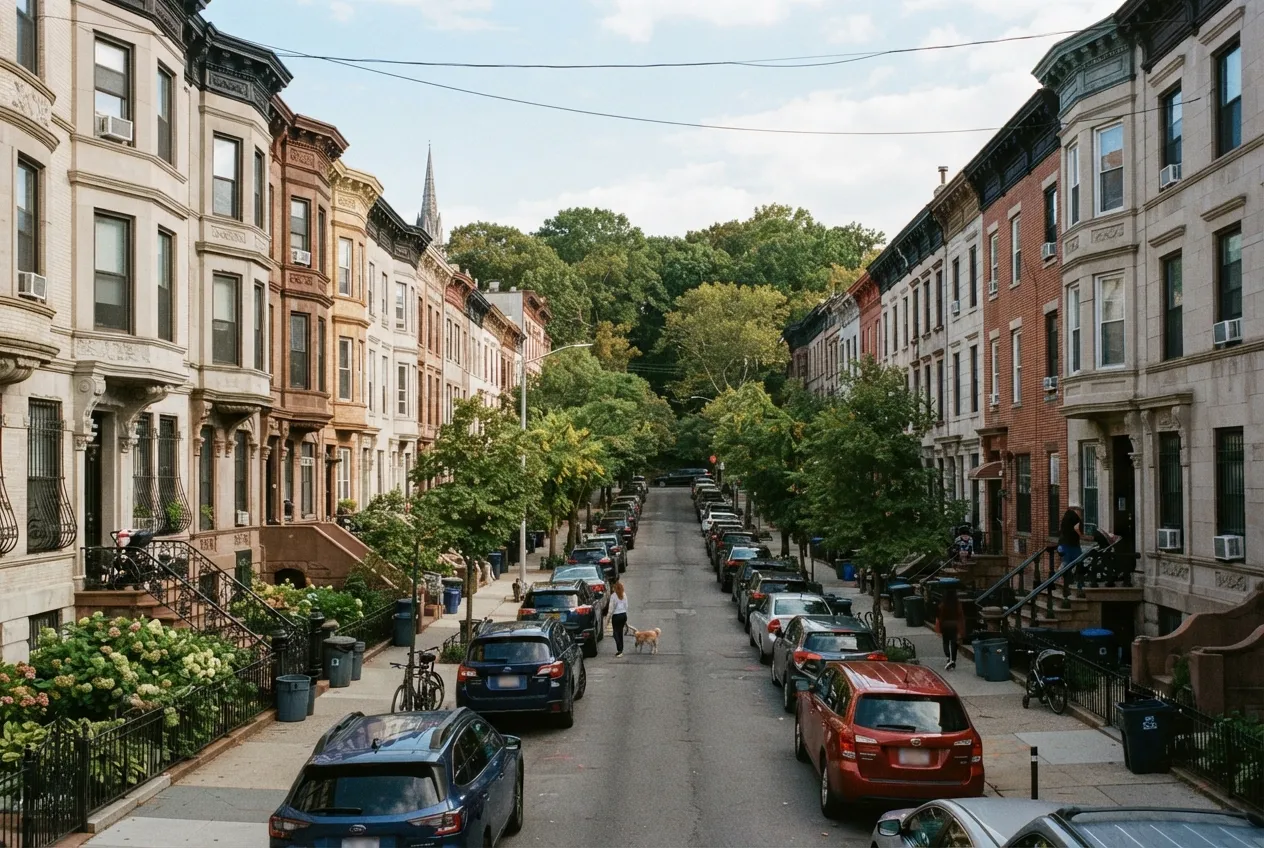
Park Slope is about a mile east of our Brooklyn office, so it's one of the neighborhoods our technicians work in most often. The housing here is mostly older: brownstone and brick rowhouses, pre-war apartment buildings, and some newer construction mixed in. Many of these buildings have masonry chimneys that have served several generations of heating equipment, and many homes have fireplaces that were closed up, reopened or converted over the years. NorthStar Chimney Services cleans, inspects and repairs chimneys, fireplaces, dryer vents and air ducts throughout Park Slope and the 11217 ZIP code.
What We Find in Park Slope Chimneys
Older rowhouses and brownstones often have several flues in one chimney stack: one for the boiler or furnace, and others for fireplaces on different floors. Some of those fireplaces still work, some are purely decorative, and some were sealed decades ago. Before anyone lights a fire in a fireplace that hasn't been used in years, the flue should be checked for blockages, cracked tiles, debris and animal nests.
Many buildings in the neighborhood have also switched heating fuel. When a New York City building converts its boiler from oil to gas, the chimney has to be evaluated as part of the work. A new liner is often needed, because gas exhaust produces acidic condensate that can corrode an unlined or poorly lined masonry flue from the inside.
How Brooklyn Weather Affects Your Chimney
Brooklyn winters bring repeated freeze-thaw cycles. Water soaks into brick, mortar joints and the chimney crown, freezes, expands, and slowly pushes the masonry apart. Wind-driven rain from coastal storms and nor'easters can find its way into cracks you can't see from the street. Over time, that leads to loose bricks, spalling faces, water stains on interior walls and rusted dampers.
Humid summers cause a different problem: damp creosote and soot can give off a strong odor that drifts into living rooms, especially in rowhouses with a fireplace on an upper floor. A properly fitted chimney cap, a sound crown or chase cover, and a breathable waterproofing treatment go a long way toward keeping water and animals out of the flue.
Yearly Inspections and Heating Season Timing
The NFPA 211 standard calls for chimneys, fireplaces and vents to be inspected once a year. A Level 1 inspection fits when nothing about the system has changed. A Level 2 inspection is used when something changes, such as a new boiler or a switch from oil to gas, or when the home is sold. A Level 3 inspection is needed when a hidden hazard can only be reached by opening part of the chimney or building.
New York City's heat season runs from October 1 through May 31, and building owners must keep apartments heated to the city's minimum temperatures during that period. For owners of multi-unit buildings, scheduling chimney and boiler flue work in late summer or early fall helps avoid having to shut down heat when tenants need it.
Dryer Vents and Air Ducts
According to the U.S. Fire Administration, failure to clean is the leading factor contributing to clothes dryer fires in homes. In Brooklyn rowhouses and apartments, dryer vents often run long distances or through tight turns to reach an exterior wall, which lets lint build up quickly. If loads take longer to dry or the laundry area feels hot, the vent is worth checking.
For air ducts, we follow the U.S. EPA's guidance: cleaning makes sense when there is substantial visible mold growth, signs of vermin, or excessive dust and debris. The EPA also notes that duct cleaning hasn't been shown to prevent health problems, and it advises caution with chemical treatments. We'll tell you plainly whether your ducts need cleaning.
Our Services in Park Slope
Our certified technicians handle the full range of chimney, fireplace and vent work in Park Slope homes and buildings:
- Chimney sweeping
- Chimney inspection
- Chimney repair
- Chimney liner installation
- Chimney cap and chase cover installation
- Chimney waterproofing
- Fireplace and damper repair
- Chimney rebuilding
- Dryer vent cleaning
- Air duct cleaning
Nearby Neighborhoods We Serve
Along with Park Slope, we work throughout the surrounding parts of Brooklyn, including Prospect Heights, Carroll Gardens, Cobble Hill, Gowanus and Red Hook. Much of the housing in these neighborhoods shares the same features as Park Slope's, from masonry rowhouses to pre-war apartment buildings, so the same care applies.
ZIP codes we serve
- 11217
Services in Park Slope
- Chimney Sweep in Park SlopeLocal service & repairs
- Chimney Inspection in Park SlopeLocal service & repairs
- Chimney Repair in Park SlopeLocal service & repairs
- Air Duct Cleaning in Park SlopeLocal service & repairs
- Chimney Liner Installation in Park SlopeLocal service & repairs