
The short answer
A chimney cap keeps rain, animals and debris out of your flue, and a chase cover keeps water out of a framed chimney enclosure. If you notice water in the firebox, animal noises, white staining on the brick or debris falling into the fireplace, have the top of your chimney inspected. A cap or chase cover may need to be replaced or fitted for the first time.
A chimney cap and a chase cover do simple jobs that matter a lot. The cap sits over the top of the flue and keeps rain, snow, leaves, birds and squirrels out while letting smoke and exhaust escape. A chase cover is the metal panel that seals the top of a framed chimney chase, the boxed-in enclosure often built around factory-built fireplaces, so water can't soak the framing below. On a masonry chimney, the concrete crown at the top does a similar job. Many Brooklyn homes have flat roofs, tall party-wall chimneys and flues shared by several units. On these chimneys, a missing or rusted cap is a frequent source of leaks, nesting animals and debris in the fireplace. NorthStar Chimney Services inspects, measures, repairs and installs chimney caps and chase covers across Brooklyn and nearby neighborhoods.
Signs you need it
Most owners don't look at the top of their chimney until something goes wrong inside. These signs often point to a missing, damaged or poorly fitted cap or chase cover:
None of these signs proves the cap is the only problem. Water can also get in through a cracked crown, failed flashing or worn mortar. That's why we look at the whole top of the chimney before recommending anything.
- Water in the firebox, a damp smoke chamber, or rust on the damper after rain
- A strong smoke or creosote smell, especially on humid or rainy days when moisture mixes with deposits in the flue
- Chirping, scratching or other animal noises coming from the chimney
- Leaves, twigs, nesting material or brick flakes landing in the firebox
- White staining on the brick, inside or outside, which shows water moving through the masonry
- Poor draft or smoke backing into the room, which can happen when a nest or debris partly blocks the flue or wind pushes down an open flue
- On a framed chase: rust streaks running down the siding, or a chase cover that sags or holds standing water
What's included
Every cap and chase cover visit includes the following. If you have a preference about materials or style, we'll explain the options and which ones suit your chimney.
- Inspection of the chimney top, including the existing cap, crown or chase cover, the flashing and the visible masonry
- Measurement of each flue so the cap fits its size and shape, including chimneys with several flues
- A check of each flue opening for nests, debris and blockage, with removal of what can be reached safely
- A camera look down the flue when water damage, a nest or a blockage is suspected
- Removal of a rusted, loose or wrong-size cap or chase cover
- Installation of a new cap with a mesh screen that keeps animals out without choking the draft
- For framed chases, a chase cover shaped so water runs off, with a drip edge that keeps water away from the siding
- Secure fastening so the cap stays in place in high wind
- Photos of the chimney top and a plain explanation of what we found and what we did
- Cleanup of the work area inside and outside
How our crew works on the roof and in your home
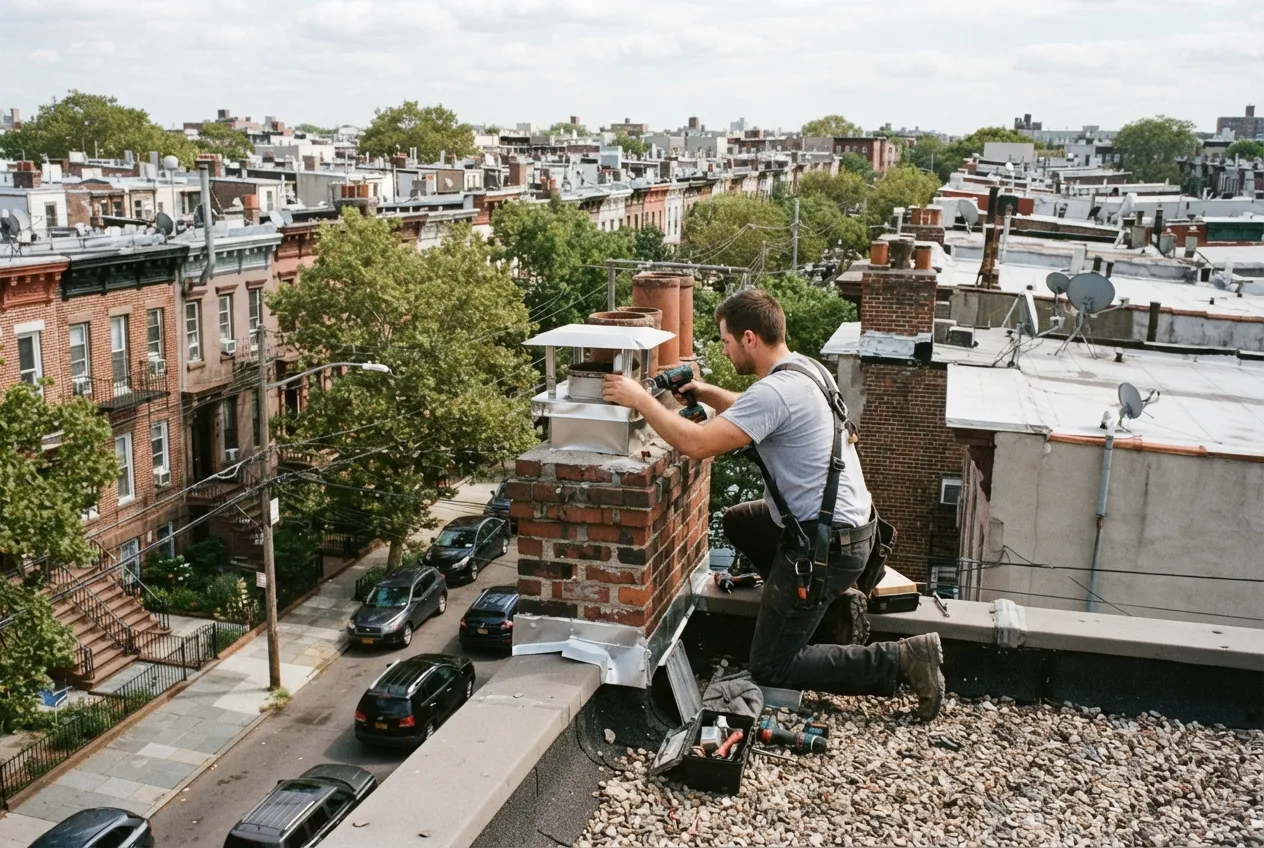
On the roof, the crew sets up safe access first. That might be a ladder to a pitched roof or the hatch or bulkhead to a flat roof. Technicians note how the chimney is built, how many flues it has and how close neighboring flues sit, which matters on attached rowhouses. Then they remove the old cap, clear the flue tops, and fit and fasten the new cap or chase cover.
Inside, we lay drop cloths from the entry to the fireplace. We also run HEPA vacuums at the firebox to catch soot and debris that fall when the flue top is cleared or a nest is pulled out. If the flue needs sweeping before the cap goes on, technicians use rotary brushes to remove creosote and debris from the flue walls. Where it helps, a camera shows the condition of the flue liner, so you can see what we see.
If an animal is still in the chimney, we won't seal it in. We make sure it's out before the new cap goes on.
The standard we follow
NFPA 211, the national standard for chimneys, fireplaces and vents, calls for an inspection once a year. Chimney professionals use three inspection levels. Level 1 is used when nothing about the system has changed. Level 2 applies when something has changed, such as a new appliance or a switch of fuel, or when the home is sold. Level 3 applies when a hidden hazard has to be reached by opening part of the chimney or building. A cap replacement usually fits within a routine visit. If our certified technicians find damage that needs a closer look, we'll explain which level makes sense and why.
If your building is converting its boiler from oil to gas, the chimney has to be evaluated as part of that work. A new liner is often needed, because gas exhaust produces acidic condensate that can corrode a masonry flue. A new liner also needs a cap sized to match it.
What affects the price
Every chimney is different, so we quote after we've seen yours. These are the main factors:
You'll get a clear quote before any work begins, and we'll explain each item on it.
- Chimney height and roof access, since steep, tall or hard-to-reach roofs take more setup
- Fuel type, since wood, gas and oil call for different cap and screen styles
- Flue size and condition, including how many flues one cap has to cover
- How much buildup, debris or nesting material has to be removed
- Whether a camera inspection is needed
- Whether the crown, flashing, masonry or chase framing needs repair before the cap or cover goes on
- Custom sizing for unusual flues or chases
How a visit works
When you contact us, we'll ask what you've noticed, the type of home and roof, and which fuel your fireplace or heating system burns. Then we set a time that works for you. On the day, the technicians walk through the plan with you, protect the area around the fireplace, and inspect the chimney top. They show you photos of what they find and give you a quote. With your approval, they do the work, clean up, and go over the results before they leave.
New York City's heat season runs from October 1 through May 31. Late summer and early fall are a good time to deal with caps and chase covers, before your heating system and fireplace are in steady use.