
The short answer
NorthStar Chimney Services is based in Cobble Hill at 373 Columbia St and serves all of ZIP code 11231 with chimney sweeping, inspection, repair, liners, and dryer vent and air duct cleaning. Schedule yearly inspections in late spring or summer, before the city's October 1 heat season begins.
NorthStar Chimney Services is based in Cobble Hill, with our office at 373 Columbia St. That makes this neighborhood, ZIP code 11231, the one we know best. Our certified technicians sweep, inspect and repair chimneys in the brownstones, rowhouses and pre-war apartment buildings throughout Cobble Hill. We also clean the dryer vents and air ducts that keep these homes running. Here is what homeowners and building owners in the neighborhood should know.
Chimneys in Older Brooklyn Homes
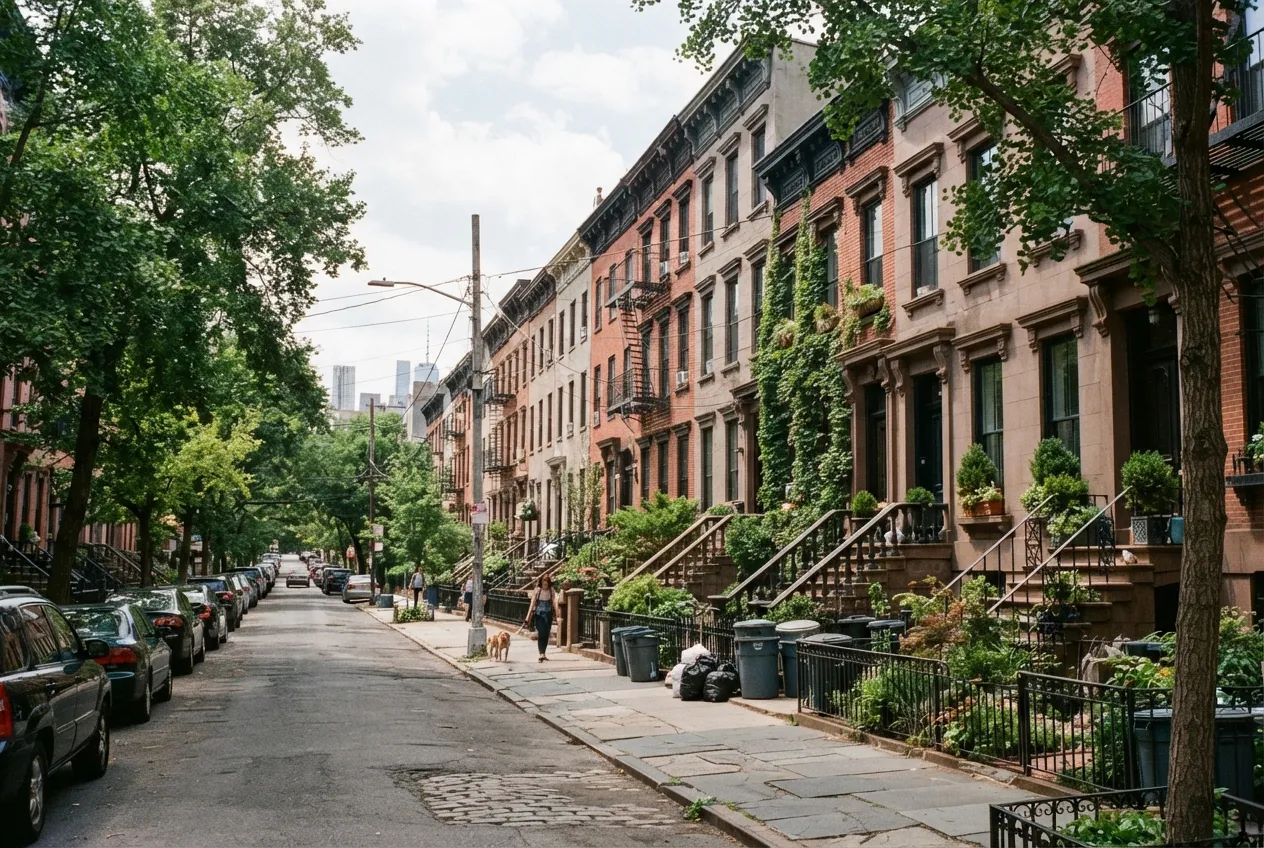
Much of Cobble Hill's housing is older masonry. The neighborhood has brownstones and brick rowhouses with shared walls, plus pre-war apartment buildings served by a central boiler chimney. Many of these homes have more than one flue. Some original fireplaces have been closed off, converted to decorative use, or reopened years later. Before anyone lights a fire in a fireplace that has sat unused, the flue should be inspected for blockages, cracked tiles, loose mortar and damper problems.
In rowhouses, chimneys often sit at a party wall or rise through a flat roof. Problems at the top, such as a missing cap or a deteriorated crown, can go unnoticed from the street. We check the full system, from the firebox and damper up to the crown and cap.
Yearly Inspections and the City's Heat Season
The NFPA 211 standard calls for chimneys, fireplaces and vents to be inspected once a year. Chimney professionals use three inspection levels. A Level 1 inspection fits when nothing about the system has changed. A Level 2 inspection is called for when the system changes, such as a new appliance or a switch of fuel, or when the home is sold. A Level 3 inspection is used when a hidden hazard has to be reached by opening part of the chimney or building.
Timing matters in New York City. The city's heat season runs from October 1 through May 31, and during that period building owners must keep apartments heated to the city's minimum temperatures. For boiler chimneys, late spring and summer are the best times for inspection, sweeping and repairs, so the system is ready before heat is required.
Oil-to-Gas Conversions and Chimney Liners
When a New York City building converts its boiler from oil to gas, the chimney has to be evaluated as part of the work. A new liner is often needed, because gas exhaust produces acidic condensate that can corrode a masonry flue. We inspect the existing flue, explain what we find, and install a properly sized liner when one is required.
How Brooklyn Weather Wears Down Masonry
Brooklyn winters bring repeated freezing and thawing. The rest of the year brings heavy rain, humid summers and coastal storms with wind-driven rain. Water is the main threat to masonry. It soaks into brick and mortar, expands when it freezes, and gradually opens cracks in the crown and joints. Signs to watch for include:
Depending on what we find, the fix may be a chimney cap or chase cover, waterproofing, repointing or other chimney repair, or fireplace and damper repair. When the masonry is too far gone, partial or full chimney rebuilding may be the right call.
- Water stains on walls or ceilings near the chimney
- Crumbling mortar or flaking brick
- Rust on the damper or inside the firebox
- A musty smell from the fireplace, especially after rain
- Debris or nesting material falling into the firebox
Dryer Vents and Air Ducts
According to the U.S. Fire Administration, failure to clean is the leading factor contributing to clothes dryer fires in homes. In rowhouses and apartments, dryer vents often run a long way to reach an exterior wall or the roof, which gives lint more places to collect. If loads take longer to dry than they used to, or the laundry area feels unusually hot, the vent should be cleaned.
For air ducts, we follow the U.S. EPA's guidance. Cleaning makes sense when there is substantial visible mold growth, vermin, or excessive dust and debris. The EPA also notes that duct cleaning has not been shown to prevent health problems, so we don't claim that it will. The agency advises researching the process before responding to very cheap advertised offers and being careful with chemical treatments. We walk you through our method and discuss any chemical treatment with you before it is used.
Serving Cobble Hill and Nearby Neighborhoods
Our office at 373 Columbia St keeps us close to homes throughout Cobble Hill and ZIP code 11231. We also serve the surrounding Brooklyn neighborhoods of Carroll Gardens, Gowanus, Red Hook, Park Slope and Brooklyn Heights.
ZIP codes we serve
- 11231
Services in Cobble Hill
- Chimney Sweep in Cobble HillLocal service & repairs
- Chimney Inspection in Cobble HillLocal service & repairs
- Chimney Repair in Cobble HillLocal service & repairs
- Air Duct Cleaning in Cobble HillLocal service & repairs
- Chimney Liner Installation in Cobble HillLocal service & repairs