
The short answer
Chimney repair in Cobble Hill usually means fixing water damage to older masonry, such as worn mortar, cracked crowns, and failed flashing, or replacing flue liners, especially after an oil-to-gas boiler conversion. NorthStar's certified technicians work from our Cobble Hill office and start every repair with an inspection so you know exactly what needs fixing.
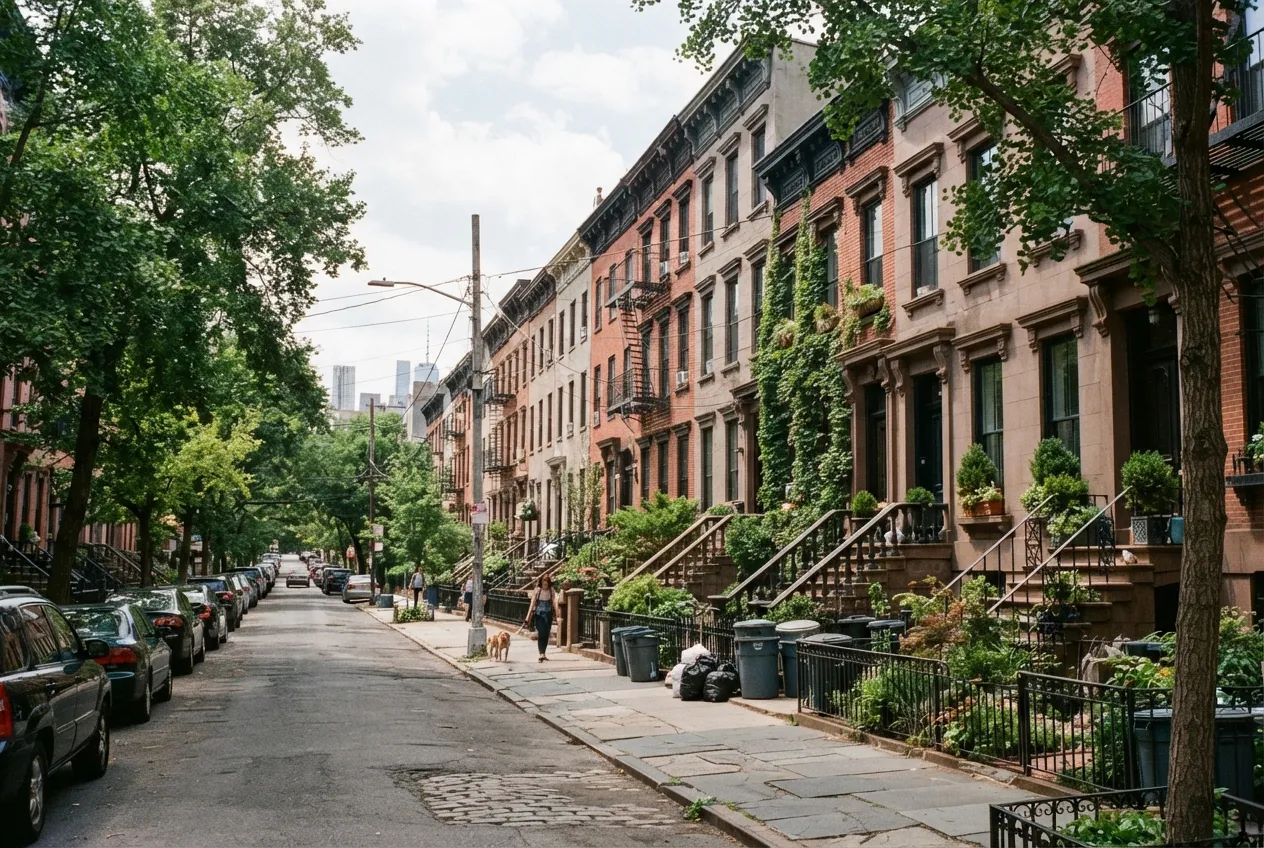
Most chimneys in Cobble Hill were built long ago and have been through many winters since. Whether you live in a brownstone, a brick rowhouse, or a pre-war apartment building, your chimney has a steady job: carrying smoke from a fireplace or exhaust from a boiler or water heater up and out of the house. When mortar wears out, a crown cracks, or a flue liner fails, that job gets harder and less safe. NorthStar Chimney Services has its office at 373 Columbia St, right here in Cobble Hill, so our certified technicians can reach homes in the 11231 ZIP code and nearby neighborhoods without a long trip across the borough.
Common Chimney Problems in Cobble Hill Homes
Brick and stone chimneys on older Brooklyn homes tend to fail in predictable ways, and water is usually the root cause. Rain and melting snow get into worn mortar joints, freeze, expand, and slowly push the brick apart. On a rowhouse with a shared party wall, a leaking chimney can also show up as a stain on a neighbor's side or in a top-floor ceiling far from the fireplace itself.
Some of these problems are visible from the street or the roof. Others, especially liner damage, only show up when a technician looks inside the flue with a camera.
- Crumbling or missing mortar joints that need repointing
- Cracked or deteriorated chimney crowns that let water into the masonry
- Spalling brick, where the face of the brick flakes or pops off
- Damaged or missing chimney caps that let in rain, debris, and animals
- Failed flashing where the chimney meets the roof
- Cracked, gapped, or corroded flue liners
- Loose or leaning chimney tops above the roofline
Every Repair Starts With an Inspection
We don't recommend a repair based on a guess. Every job starts with an inspection so we know what is actually wrong and how far the damage goes. The NFPA 211 standard calls for chimneys, fireplaces, and vents to be inspected once a year, and chimney professionals use three inspection levels. A Level 1 inspection is used when nothing about the system has changed. A Level 2 inspection is called for when the system changes, such as a new appliance or a switch in fuel, or when the home is sold. A Level 3 inspection is used when a hidden hazard has to be reached by opening part of the chimney or the building.
After the inspection, we explain what we found, share photos or video when we can, and lay out the repair options in plain terms. Some fixes are small, like replacing a cap or sealing a crown. Others, like rebuilding the top of a chimney or relining a flue, are bigger jobs, and we'll tell you why we think they're needed.
Oil-to-Gas Conversions and Flue Liners
Many Brooklyn brownstones and apartment buildings have moved from oil heat to gas, and more are still making the switch. When a New York City building converts its boiler from oil to gas, the chimney has to be evaluated as part of the work. A new liner is often needed, because gas exhaust produces acidic condensate that can corrode a masonry flue.
If your building is planning a conversion, bring us in early so the chimney work can be scheduled alongside the boiler installation instead of holding it up. If a conversion was done years ago without a new liner, an inspection can show whether the flue has started to deteriorate.
Plan Repairs Around Heat Season
New York City's heat season runs from October 1 through May 31. During those months, building owners must keep apartments heated to the city's minimum temperatures, which means the boiler and its chimney need to be working. A chimney problem discovered in January can put an owner in a tough spot.
Late spring and summer are usually the easiest times to handle masonry and liner repairs, since the heating system can be taken offline and mortar cures well in mild weather. If you've noticed water stains, loose brick, or a smoky smell, don't wait until fall to have it looked at. If something comes up mid-winter, we'll work with you on the safest way to address it while keeping the heat on as much as possible.
Serving Cobble Hill and Nearby Neighborhoods
Because our office is on Columbia Street in Cobble Hill, we repair chimneys throughout the 11231 ZIP code and in the neighborhoods next door: Carroll Gardens, Gowanus, Red Hook, Park Slope, and Brooklyn Heights. Housing across this part of Brooklyn is similar, with brownstones, brick rowhouses, and pre-war apartment buildings alongside some detached homes, so the repair issues we see tend to be similar too.
More services in Cobble Hill
- Chimney Sweep in Cobble HillLocal service & repairs
- Chimney Inspection in Cobble HillLocal service & repairs
- Air Duct Cleaning in Cobble HillLocal service & repairs
- Chimney Liner Installation in Cobble HillLocal service & repairs