
The short answer
Under the NFPA 211 standard, Fort Greene chimneys should be inspected once a year, and swept whenever that inspection finds creosote, soot or blockages. NorthStar's certified technicians sweep fireplace and boiler flues in brownstones, rowhouses and pre-war apartment buildings throughout 11205.
Many Fort Greene homes were built when fireplaces were the main source of heat, and plenty of those chimneys are still in use today. Some serve a wood fire on a cold night, and others vent a gas or oil boiler. NorthStar Chimney Services sends certified technicians from our Brooklyn office, about 2 miles away, to sweep and inspect chimneys in Fort Greene and the 11205 ZIP code. This page explains what a sweep involves in this neighborhood's older housing and how to tell when yours is due.
Why Fort Greene Chimneys Need Attention
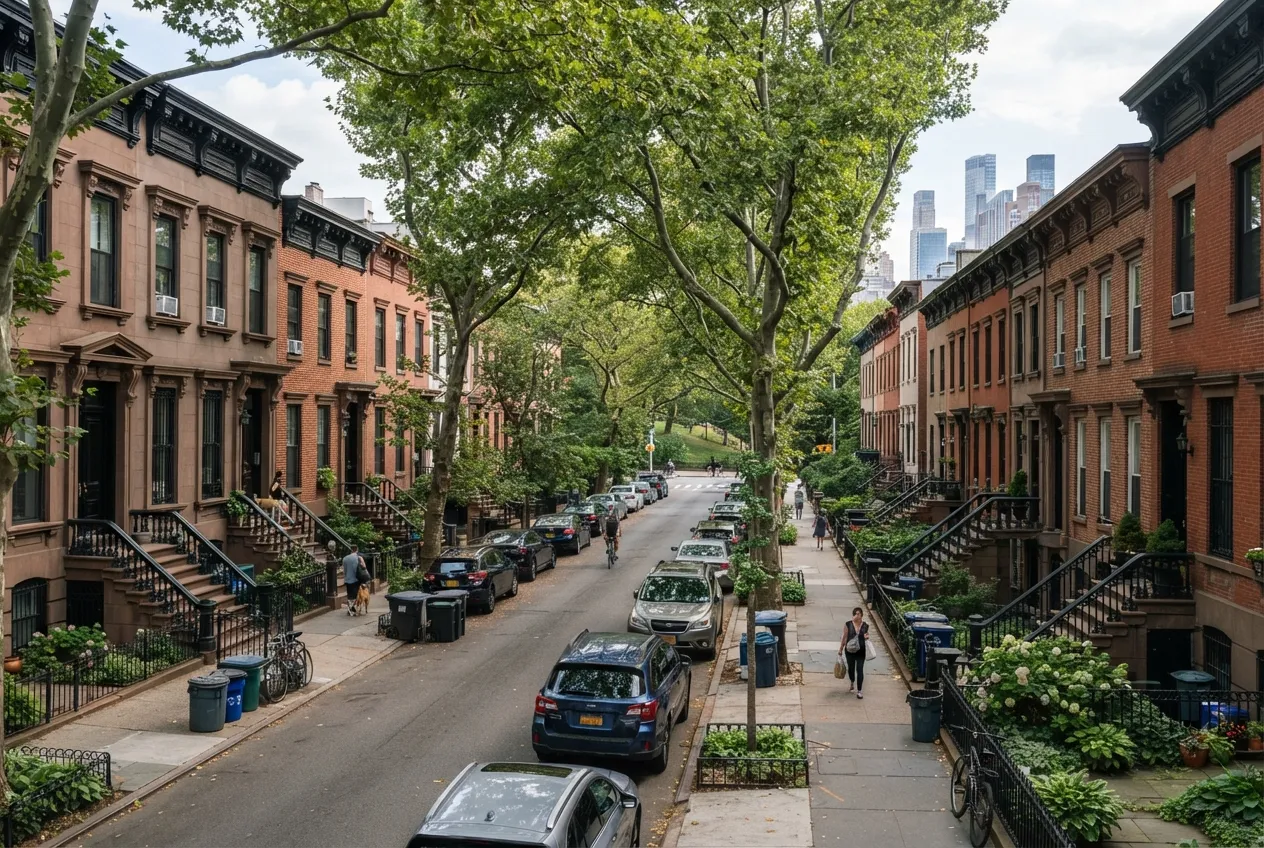
Fort Greene's housing is mostly brownstones and rowhouses, along with pre-war apartment buildings and some newer construction. In an older rowhouse, a single chimney stack often holds several flues. There may be one for each fireplace on each floor, plus one for the boiler in the cellar. Over the decades, some of those fireplaces were sealed up, converted to gas logs, or reopened by a later owner. As a result, it isn't always clear which flue goes where.
That history matters when it's time to sweep. Wood fires leave creosote on flue walls. Soot, loose debris and nesting material can collect in flues that haven't been used for years. Old clay tile liners can crack, and mortar joints in shared walls can wear down. A sweep is the right time to find these problems, before you light a fire or the heat comes on for the season.
What a Chimney Sweep Visit Includes
Our technicians start by confirming which flue serves which fireplace or appliance. Then they protect your room, sweep the flue, and check the parts of the system they can reach.
If a flue is blocked or damaged, we explain the problem and your options before doing any further work.
- Drop cloths and a sealed vacuum setup at the fireplace opening to keep soot out of your living space
- Brushing the flue from the top, the bottom or both, depending on roof access and the flue's condition
- Cleaning the smoke chamber, smoke shelf and firebox
- Checking that the damper opens, closes and seals
- Looking at the crown, cap and visible masonry from the roof when it is safe to reach
- A plain-language explanation of what we found, with photos where possible
How Often to Sweep and Inspect
The NFPA 211 standard calls for chimneys, fireplaces and vents to be inspected once a year. A Level 1 inspection fits when nothing about the system has changed. A Level 2 inspection is used when something does change, such as a new appliance or a switch of fuel, or when the home is sold. A Level 3 inspection is reserved for cases where a hidden hazard can only be reached by opening part of the chimney or the building.
Whether you need a sweep depends on how much buildup the inspection finds. A fireplace used most weekends in winter will usually need sweeping more often than one lit a few times a year. A boiler flue should also be checked, even if you never use the fireplace.
Timing matters here too. New York City's heat season runs from October 1 through May 31, and boilers work hardest during those months. Scheduling a sweep in late summer or early fall means problems can be fixed before your building needs steady heat.
Oil-to-Gas Conversions and Chimney Liners
When a New York City building converts its boiler from oil to gas, the chimney has to be evaluated as part of the work. A new liner is often needed. Gas exhaust produces acidic condensate, and that condensate can corrode a masonry flue that was built for oil.
If your Fort Greene brownstone or building is planning a conversion, a sweep and Level 2 inspection are a sensible first step. Sweeping removes years of oil soot so the flue walls can actually be seen. The inspection then shows whether the existing flue can be used or whether a liner should be installed.
Serving Fort Greene and Nearby Neighborhoods
Fort Greene is about 2 miles northeast of our Brooklyn office, so our crews know the rowhouse roofs, narrow stairways and shared chimney stacks common to this part of the borough. In co-op and condo buildings, we can work with your building management on roof access and scheduling.
We also sweep chimneys in nearby Downtown Brooklyn, DUMBO, Boerum Hill, Prospect Heights and Brooklyn Heights.
More services in Fort Greene
- Chimney Inspection in Fort GreeneLocal service & repairs
- Chimney Repair in Fort GreeneLocal service & repairs
- Air Duct Cleaning in Fort GreeneLocal service & repairs
- Chimney Liner Installation in Fort GreeneLocal service & repairs