
The short answer
NorthStar Chimney Services repairs masonry chimneys on Fort Greene brownstones, rowhouses and pre-war buildings, including repointing, crowns, caps, flashing and flue liners. We start with an inspection so you know what needs attention now and what can wait. If you can, plan repairs before New York City's heat season begins on October 1.
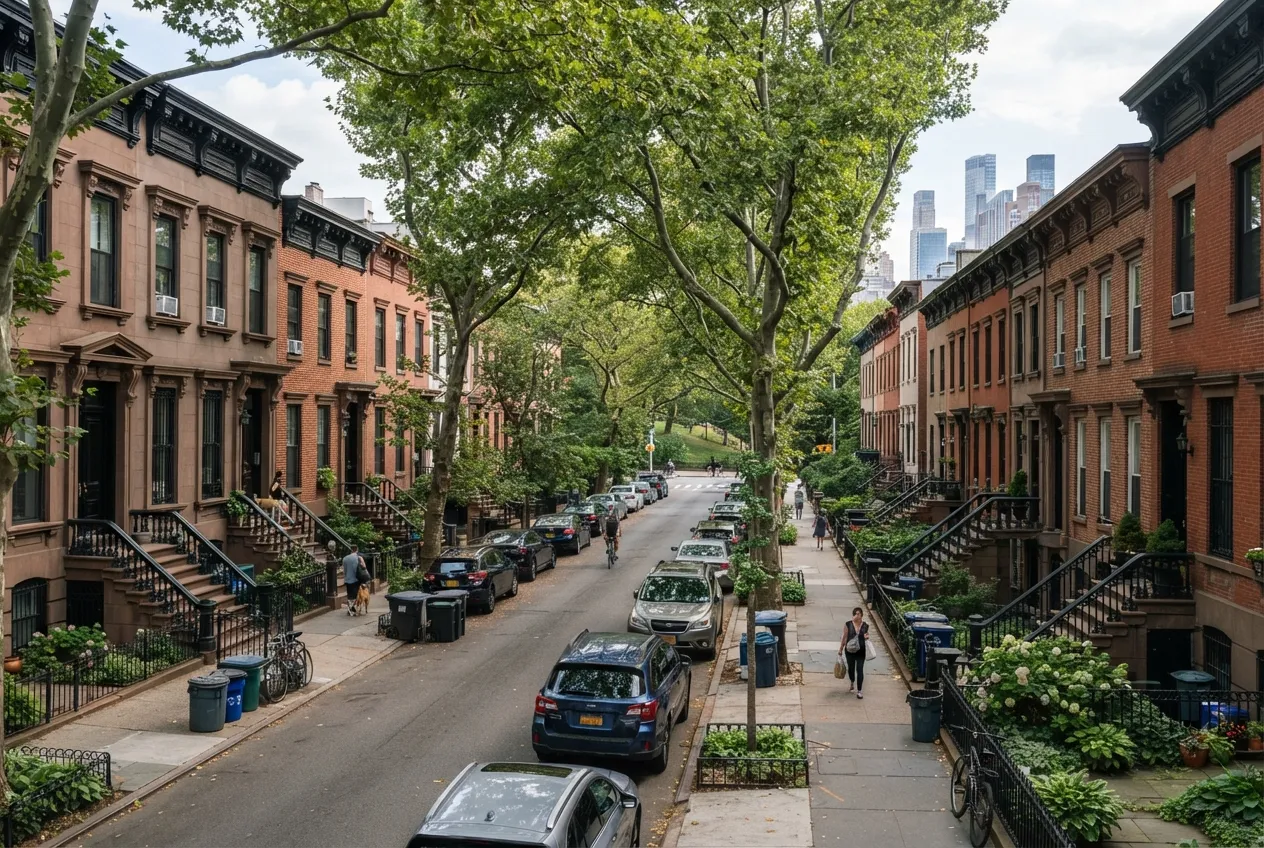
Fort Greene's brownstones, rowhouses and pre-war apartment buildings have chimneys that have been through many New York winters. Many of these chimneys sit on party walls, carry several flues side by side, and vent boilers as well as fireplaces. When the brick, mortar, crown or liner starts to fail, the damage rarely stays in one place. Water works its way into walls, and a cracked flue can let heat or exhaust escape where it shouldn't. NorthStar Chimney Services repairs chimneys throughout Fort Greene and ZIP code 11205, about 2 miles northeast of our Brooklyn office. Our certified technicians inspect first, explain what they find, and fix what actually needs fixing.
Chimney Repairs We Handle in Fort Greene
Chimney repair covers everything from the cap at the top to the firebox at the bottom. On the older masonry chimneys common in Fort Greene, the work usually includes:
- Repointing: removing cracked or missing mortar joints and replacing them with mortar suited to older brick
- Repairing or rebuilding cracked chimney crowns that let water into the top of the stack
- Installing or replacing chimney caps to keep out rain, debris and animals
- Resealing or replacing flashing where the chimney meets the roof
- Rebuilding spalled or crumbling brick above the roofline
- Repairing damaged clay flue tiles or relining the flue
- Fixing fireplace dampers, firebox brick and smoke chamber surfaces
Why Chimneys on Older Fort Greene Homes Break Down
Most chimneys on the neighborhood's brownstones and rowhouses rise above flat roofs, where they get the full force of wind, rain and snow. Water causes most of the damage. It soaks into brick and mortar, freezes, expands, and pushes the masonry apart a little more each winter. Once a crown cracks or flashing pulls loose, water can run down the stack and show up as stains on walls or ceilings, sometimes several floors below the roof.
Age matters too. Older brick chimneys were often built with softer mortar. If they are repaired with mortar that is too hard, the surrounding brick can crack, so we match repair materials to the existing masonry. When a stack is shared or sits along a party wall, we also point out any issues that could affect the neighboring property so you can coordinate with your neighbor.
Oil-to-Gas Conversions and Flue Liners
When a New York City building converts its boiler from oil to gas, the chimney has to be evaluated as part of the work. A new liner is often needed because gas exhaust produces acidic condensate that can corrode a masonry flue. In Fort Greene buildings that once burned oil, an unlined or deteriorated flue is a common repair need.
We evaluate the existing flue and check its condition. If the building needs a liner, we recommend one sized for the new appliance and install it so the boiler vents properly.
Inspection Comes First
The NFPA 211 standard calls for chimneys, fireplaces and vents to be inspected once a year. Chimney professionals use three levels. A Level 1 inspection fits when nothing about the system has changed. A Level 2 inspection applies when the system changes, for example with a new appliance or a switch of fuel, or when the home is sold. A Level 3 inspection is used when a hidden hazard can only be reached by opening part of the chimney or building.
Most repair visits in Fort Greene start with a Level 1 or Level 2 inspection. If we think a Level 3 inspection is needed, we explain why before any opening is made. You get a clear account of what we found and which repairs are urgent.
Plan Around Heat Season
New York City's heat season runs from October 1 through May 31. During those months, building owners must keep apartments heated to the city's minimum temperatures. If the chimney serving your boiler needs major work, a repair that takes it out of service in January creates a real problem for you and your tenants.
Exterior masonry work also depends on the weather, because mortar needs temperatures above freezing to cure properly. For both reasons, late spring through early fall is the best time for repointing, crown rebuilds and liner installations. Urgent repairs can't always wait, though, and we'll tell you if something needs attention right away.
Serving Fort Greene and Nearby Neighborhoods
Besides Fort Greene, we repair chimneys in Downtown Brooklyn, DUMBO, Boerum Hill, Prospect Heights and Brooklyn Heights. These neighborhoods have the same mix of brownstones, rowhouses and pre-war apartment buildings, and their chimneys face the same weather.
More services in Fort Greene
- Chimney Sweep in Fort GreeneLocal service & repairs
- Chimney Inspection in Fort GreeneLocal service & repairs
- Air Duct Cleaning in Fort GreeneLocal service & repairs
- Chimney Liner Installation in Fort GreeneLocal service & repairs