
The short answer
NorthStar Chimney Services repairs chimneys in Prospect Heights, including masonry, crowns, flashing, caps, dampers and flue liners. We start with an inspection, explain what we find, and recommend only the work the chimney needs.
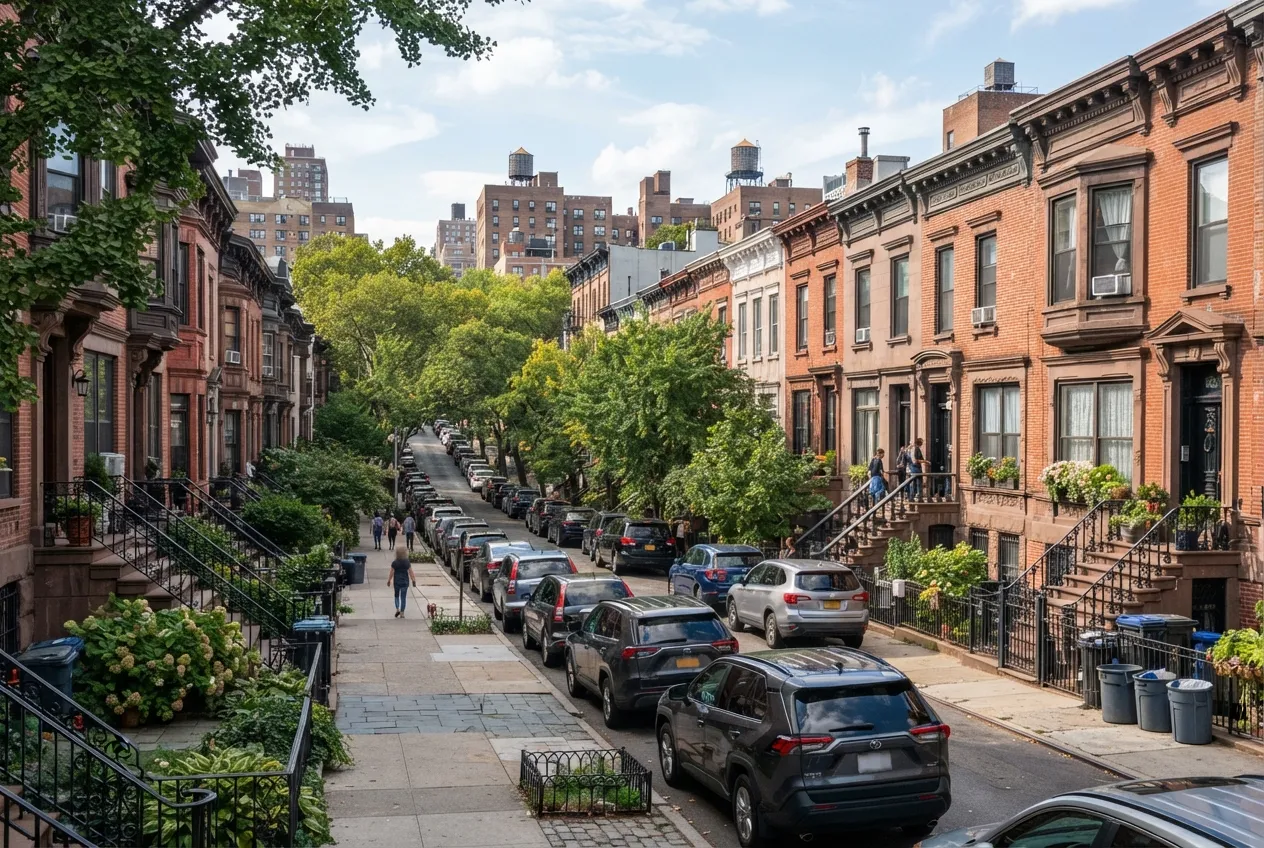
Prospect Heights is mostly brownstones, rowhouses and pre-war apartment buildings, and many of their chimneys have been working for a long time. Brick and mortar wear down, flue liners crack, crowns split, and water finds its way in. NorthStar Chimney Services repairs chimneys for homeowners and building owners in Prospect Heights, about 2 miles east of our Brooklyn office. Our certified technicians inspect first, explain what they find in plain terms, and fix what actually needs fixing. This page covers the repairs we see most often in the neighborhood, how we approach them, and what to expect when you call us.
Common chimney problems in Prospect Heights homes
Most chimneys in Prospect Heights are brick, built into the walls of rowhouses or running up through pre-war apartment buildings. They take a beating from freeze-thaw cycles, rain blowing across flat roofs, and many years of heating. The damage often shows up slowly, so it helps to know the signs.
Water is behind most of these problems. A small crack in a crown or a gap in the flashing can let moisture soak into the brick for a long time before anyone notices a stain inside. Catching it early usually means a smaller repair.
- Crumbling or missing mortar joints between bricks, usually fixed by repointing
- Spalling brick, where the face of the brick flakes or pops off
- A cracked or broken chimney crown that lets water into the chimney
- Failed flashing where the chimney meets the roof, causing leaks or stains on ceilings and walls
- A cracked, corroded or missing flue liner
- A rusted or stuck damper, or a missing chimney cap that lets in rain and animals
- A leaning chimney top or loose bricks near the top of the stack
Why we inspect before we repair
We do not guess at repairs from the sidewalk. The NFPA 211 standard calls for chimneys, fireplaces and vents to be inspected once a year, and chimney professionals use three inspection levels. A Level 1 inspection fits a chimney where nothing has changed. A Level 2 inspection applies when the system changes, such as a new appliance or a switch of fuel, or when the home is sold. A Level 3 inspection is used when a hidden hazard can only be reached by opening part of the chimney or building.
For many repair calls, a Level 2 inspection with a camera scan of the flue is the right starting point. It shows cracks in the liner and gaps in the joints that you cannot see from the firebox or the roof. You get photos and a clear explanation of what is wrong, what can wait, and what should not.
Flue liners and oil-to-gas conversions
Many older buildings in Prospect Heights have converted, or are planning to convert, their boilers from oil to gas. When a New York City building makes that switch, the chimney has to be evaluated as part of the work. A new liner is often needed, because gas exhaust produces acidic condensate that can corrode a masonry flue.
We evaluate the existing flue, confirm whether a liner is needed, and install a liner sized for the new appliance. We also check liners in homes that have not changed fuel, since cracked clay tiles and worn mortar joints are common in older chimneys and can let heat and exhaust reach places they should not.
Planning repairs around heating season
New York City's heat season runs from October 1 through May 31. During those months, building owners must keep apartments heated to the city's minimum temperatures, so a chimney that serves a boiler cannot simply be taken out of service for a long stretch.
If you own a multi-family building, it makes sense to schedule larger work, such as relining or rebuilding a chimney top, in late spring or summer. If a problem turns up in the middle of winter, we will tell you what has to be fixed right away for safety and what can be planned for warmer weather.
What to expect from a repair visit
Here is how a typical repair job with us goes:
We also work in nearby Park Slope, Fort Greene, Downtown Brooklyn, DUMBO and Boerum Hill, where the housing and the repairs are much the same.
- We inspect the chimney and document problems with photos.
- We explain the findings and give you a written scope of the recommended repairs.
- We protect floors and furnishings and set up safely on the roof.
- Our certified technicians complete the work, from repointing and crown repair to flashing, caps, dampers and liners.
- We walk you through the finished work and let you know when the chimney should be inspected next.
More services in Prospect Heights
- Chimney Sweep in Prospect HeightsLocal service & repairs
- Chimney Inspection in Prospect HeightsLocal service & repairs
- Air Duct Cleaning in Prospect HeightsLocal service & repairs
- Chimney Liner Installation in Prospect HeightsLocal service & repairs