
The short answer
A chimney sweep clears creosote, soot and debris from fireplace, stove and boiler flues so smoke and exhaust vent safely. In Gowanus, where brownstones and pre-war buildings often have older masonry chimneys, plan a sweep along with the yearly inspection that the NFPA 211 standard calls for.
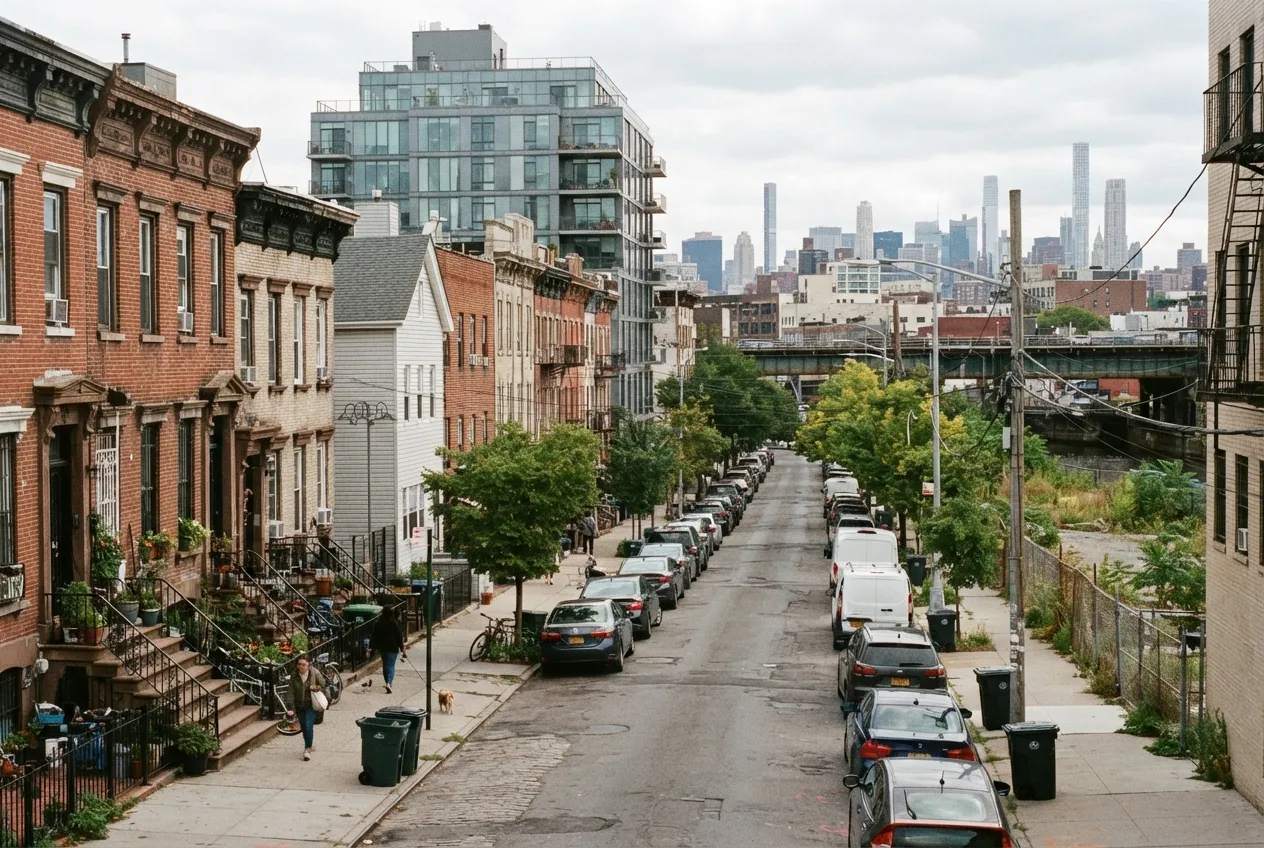
Our office is at 373 Columbia St, so Gowanus chimneys are close to home for us. The neighborhood mixes brownstones and rowhouses with pre-war apartment buildings and newer construction. Many of those buildings still have working fireplaces, wood stoves, or masonry flues that vent a boiler or water heater. A chimney sweep removes the soot, creosote and debris that build up inside those flues so smoke and exhaust leave the house the way they should. Below is what a sweep involves in Gowanus homes, how it connects to yearly inspections, and when to schedule one.
What a Chimney Sweep Covers
A sweep is a cleaning of the flue and the parts of the fireplace or appliance connected to it. Our certified technicians protect the room first, then brush the flue from below, from the roof, or both, depending on how the chimney is built and what access it allows. On attached homes, roof access often depends on the building, so we plan the approach before we arrive.
- Drop cloths and a vacuum setup to keep soot out of your living space
- Brushing creosote and soot from the flue walls
- Cleaning the smoke chamber, smoke shelf and firebox on fireplaces
- Clearing leaves, nesting material and fallen masonry debris
- Checking that the damper opens, closes and seals
- A visual look at the flue, crown and cap, with notes on anything that needs attention
Why Older Gowanus Chimneys Need Regular Sweeping
Many brownstones and rowhouses in the neighborhood were built with fireplaces in several rooms, each feeding a flue in a shared masonry stack. Over the decades, some were sealed off, some became decorative, and some are still burning wood. Each situation brings its own problems.
Flues that sit unused collect debris, and birds or other animals can move in. Flues that are used regularly collect creosote, a tar-like residue from burning wood that can ignite if it builds up. Brick and mortar also wear down from winter freezing and thawing, and loose material can fall into the flue and partly block it. A sweep clears all of this and gives us a clear view of the flue's condition.
Sweeping and Your Yearly Chimney Inspection
Sweeping and inspection go together. The NFPA 211 standard calls for chimneys, fireplaces and vents to be inspected once a year, and a clean flue is much easier to evaluate. Chimney professionals use three inspection levels: Level 1 when nothing about the system has changed, Level 2 when the system changes, such as a new appliance or a switch of fuel, or when the home is sold, and Level 3 when a hidden hazard has to be reached by opening part of the chimney or building.
If you have just bought a home in Gowanus, or you are adding a wood stove or fireplace insert, a Level 2 inspection after cleaning is the usual next step. For most homeowners who burn wood each winter, a yearly sweep and Level 1 inspection keeps things on track.
Boiler Flues, Oil-to-Gas Conversions and Heat Season
Not every flue in Gowanus serves a fireplace. In many multi-family and pre-war buildings, the chimney vents the boiler. When a New York City building converts its boiler from oil to gas, the chimney has to be evaluated as part of the work, and a new liner is often needed because gas exhaust produces acidic condensate that can corrode a masonry flue. We can sweep the flue before that evaluation so its condition is easy to see.
Timing matters for building owners. New York City's heat season runs from October 1 through May 31, when apartments must be kept heated to the city's minimum temperatures. Scheduling boiler flue work in late spring or summer keeps the heating system available when tenants need it.
When to Schedule a Sweep
If you burn wood regularly, book a sweep before the season starts. Call sooner if you notice any of these signs:
- Smoke drifts into the room instead of rising up the flue
- A smoky or musty odor from the fireplace, especially on humid days
- Black, flaky or shiny deposits on the damper or in the firebox
- Fires that are hard to start or keep going
- Scratching or chirping sounds inside the chimney
- You moved in and don't know when the chimney was last cleaned
More services in Gowanus
- Chimney Inspection in GowanusLocal service & repairs
- Chimney Repair in GowanusLocal service & repairs
- Air Duct Cleaning in GowanusLocal service & repairs
- Chimney Liner Installation in GowanusLocal service & repairs