
The short answer
A chimney sweep removes creosote, soot and blockages from your flue and lets a technician check its condition. In Downtown Brooklyn's brownstones, rowhouses and pre-war buildings, plan an annual inspection and schedule sweeping before the first fire of the season or before the October 1 start of heat season.
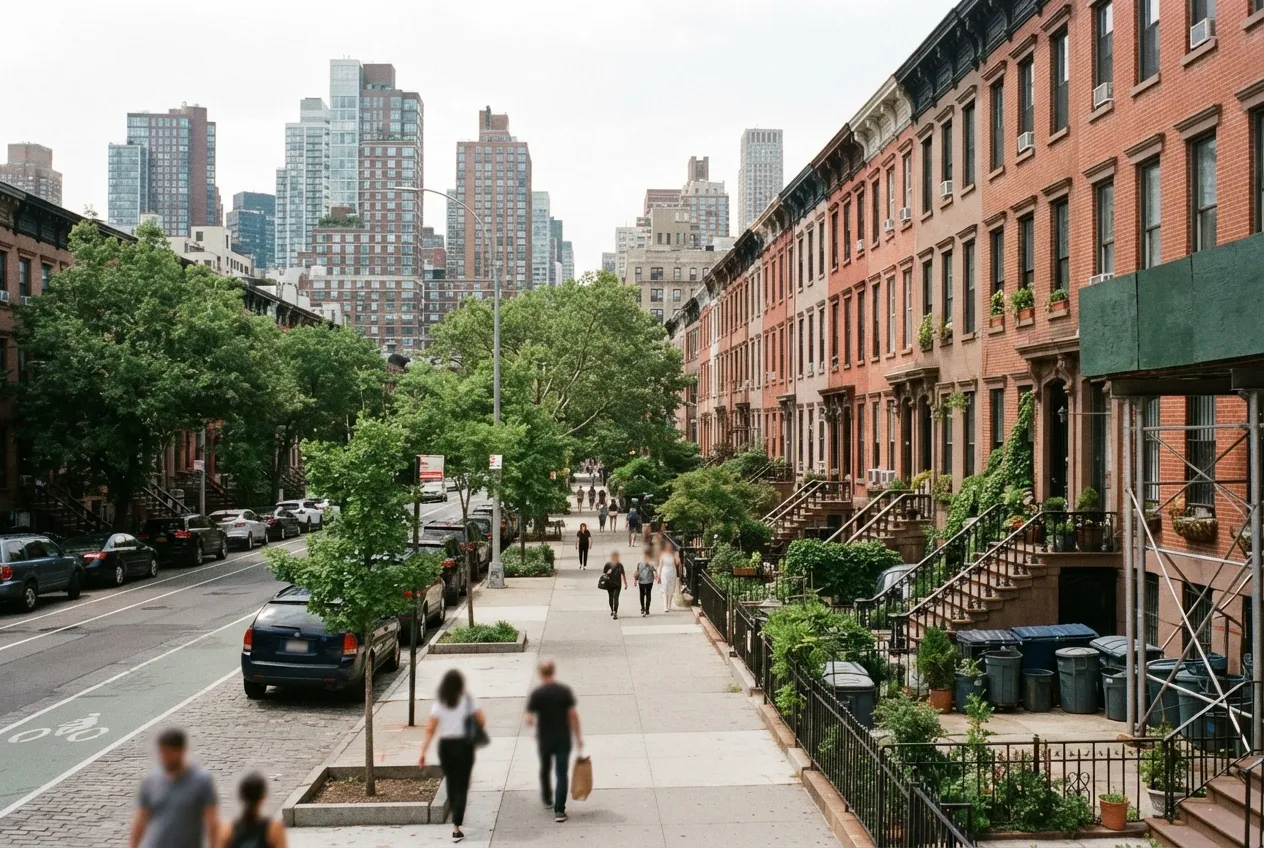
Downtown Brooklyn mixes brownstones and rowhouses on its side streets with pre-war apartment buildings and newer high-rises. Many of the older homes still have working fireplaces, and many buildings vent a boiler or furnace through a masonry chimney. NorthStar Chimney Services sends certified technicians from our Brooklyn office, about 2 miles away, to sweep chimneys throughout the 11201 ZIP code. This page covers what a sweep involves here, when to schedule one, and what we look for in the kinds of chimneys common in the neighborhood.
Why sweeping matters in Downtown Brooklyn's older homes
Wood fires leave creosote, a dark, tar-like residue that builds up on the flue walls. It is flammable, and a thick layer can catch fire inside the chimney. Gas and oil appliances don't produce creosote the same way, but their flues still collect soot, scale and debris, and they can be blocked by nests or fallen masonry.
Many brownstones and rowhouses here share party walls and have several flues running up one chimney stack, sometimes serving fireplaces on more than one floor. Some fireplaces were sealed decades ago and later reopened. In those homes, it's important to know which flue serves which fireplace or appliance, and whether it's clear, before anyone lights a fire.
What a chimney sweep visit includes
Every chimney is different, but a typical visit follows the same basic order:
If we find something that needs repair, we explain what it is and why it matters. Sweeping and repair are separate decisions, and you choose what happens next.
- Covering the floor and furniture around the fireplace before work starts
- Checking the firebox, damper and smoke chamber for damage and heavy buildup
- Brushing the flue from the bottom, the top or both, depending on roof access and the chimney's layout
- Running a filtered vacuum to keep soot out of the room
- Looking for cracked flue tiles, loose mortar, missing liners and blockages such as nests or debris
- Checking the chimney cap and crown where the roof can be reached safely
- Walking you through what we found, with photos when possible
How often to schedule a sweep
The NFPA 211 standard calls for chimneys, fireplaces and vents to be inspected once a year. Whether the flue also needs sweeping depends on how often it's used and what it burns. A fireplace lit most winter weekends builds up creosote faster than one used a few times a year.
Timing matters in New York City. The city's heat season runs from October 1 through May 31, and building owners must keep apartments heated to the city's minimum temperatures during that time. If your building's boiler vents through a masonry chimney, late summer or early fall is a good window to have the flue checked and cleaned before the system runs every day. For wood-burning fireplaces, schedule before your first fire of the season.
Inspections come in three levels. Level 1 fits when nothing has changed. Level 2 is called for when the system changes, such as a new appliance or a switch of fuel, or when the home is sold, which is worth knowing if you're buying or selling in the area. Level 3 is for hidden hazards that can only be reached by opening part of the chimney or building.
Oil-to-gas conversions and chimney liners
Many older buildings in Downtown Brooklyn and nearby neighborhoods have switched, or are planning to switch, from oil to gas heat. When a New York City building converts its boiler from oil to gas, the chimney has to be evaluated as part of the work. A new liner is often needed, because gas exhaust produces acidic condensate that can corrode a masonry flue.
If you're planning a conversion, a sweep is a sensible first step: a clean flue lets us see the condition of the tiles and mortar clearly. If your boiler was converted some time ago, watch for crumbling mortar near the base of the chimney, white staining on the masonry, or debris collecting at the cleanout door.
Serving 11201 and nearby neighborhoods
We work throughout Downtown Brooklyn and in DUMBO, Boerum Hill, Brooklyn Heights, Fort Greene and Carroll Gardens. Many jobs in these neighborhoods involve narrow stairways, shared roofs, and buildings where roof access goes through a building manager or neighbor. Tell us about access when you book so we can plan the visit, and let us know whether the flue serves a fireplace, a boiler, a furnace or a water heater.
More services in Downtown Brooklyn
- Chimney Inspection in Downtown BrooklynLocal service & repairs
- Chimney Repair in Downtown BrooklynLocal service & repairs
- Air Duct Cleaning in Downtown BrooklynLocal service & repairs
- Chimney Liner Installation in Downtown BrooklynLocal service & repairs