
The short answer
NorthStar Chimney Services repairs chimneys throughout Downtown Brooklyn, including masonry, crowns, caps, flashing, fireplaces and flue liners. We inspect first, explain what we find in plain terms, and recommend only the repairs the chimney actually needs.
Chimney problems in Downtown Brooklyn rarely start with a dramatic failure. More often it's a stain on a ceiling near the chimney breast, a few crumbled bricks on a roof, a cap that blew off in a storm, or a boiler contractor saying the flue needs work. NorthStar Chimney Services repairs chimneys in Downtown Brooklyn (11201) for brownstone and rowhouse owners, co-op and condo boards, and managers of pre-war apartment buildings. Our office is about 2 miles away, so getting a certified technician out to look at the problem is straightforward.
Chimney repairs we handle in Downtown Brooklyn
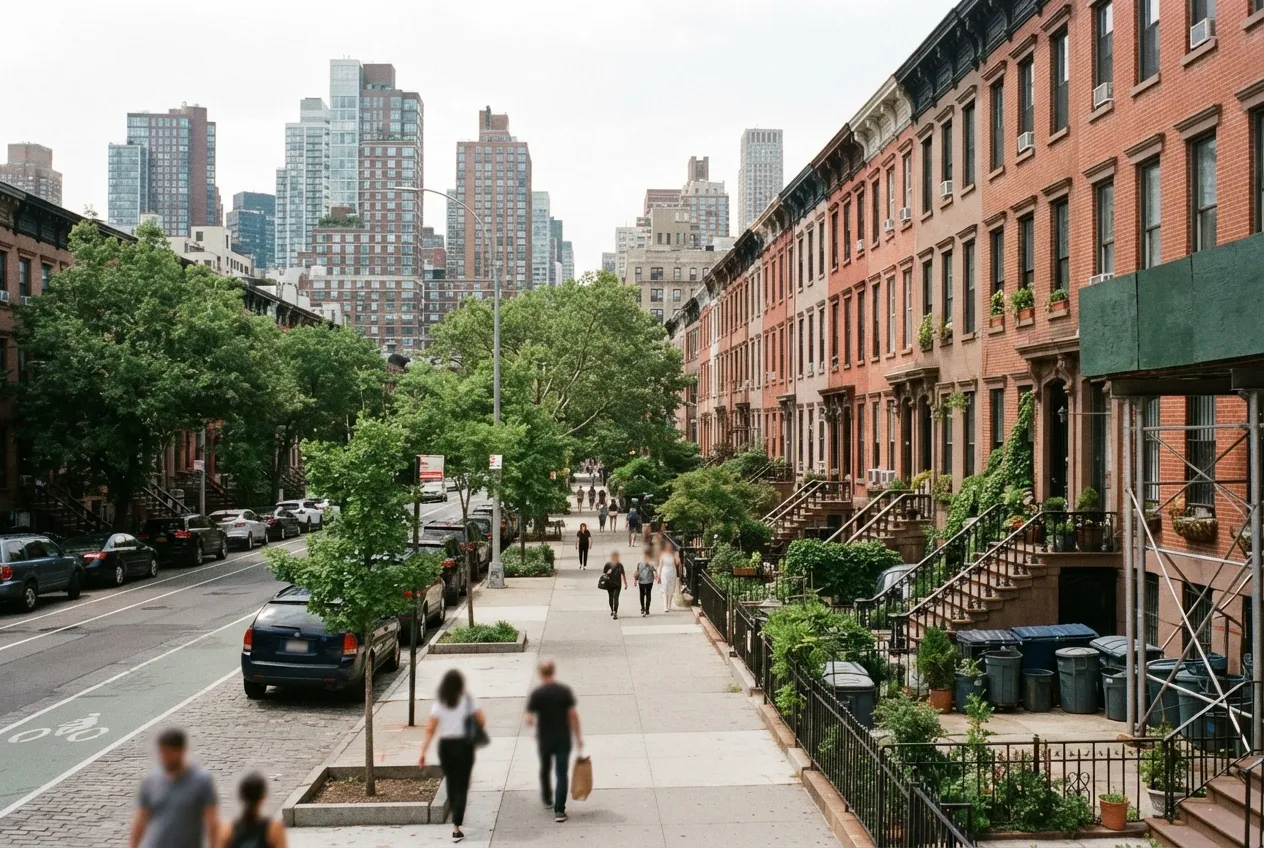
The housing here is a mix. There are older brownstones and rowhouses with shared party walls and tall brick stacks, pre-war apartment buildings that vent a central boiler through a masonry chimney, and newer buildings with metal flues and vents. Each wears out differently. Masonry chimneys take the brunt of freeze-thaw cycles, wind-driven rain and decades of exhaust. Metal systems tend to fail at joints, caps and terminations.
On attached rowhouses, a leak that shows up in your top-floor ceiling can come from your chimney, a neighbor's chimney, or the flashing between them. We trace the water before recommending work, so you aren't paying to fix the wrong thing.
- Repointing loose or eroded mortar joints and replacing spalled or cracked brick
- Rebuilding cracked chimney crowns that let water into the stack
- Installing or replacing chimney caps to keep out rain, debris and animals
- Repairing or resealing flashing where the chimney meets the roof
- Relining flues with liners suited to the appliance they serve
- Repairing firebox brick, smoke chambers and damaged dampers in working fireplaces
- Fixing loose or rusted connector pipes between a boiler or water heater and the chimney
Liners and oil-to-gas boiler conversions
Many Downtown Brooklyn buildings have already switched their boilers from oil to gas, and others are planning to. When a New York City building converts, the chimney has to be evaluated as part of the job, and a new liner is often needed. Gas exhaust produces acidic condensate, and over time it can eat into the mortar and tile of a masonry flue that was built for oil.
If you're planning a conversion, bring us in early. We'll look at the existing flue, tell you whether it can be lined, and size the liner to the new appliance so the boiler work and the chimney work line up instead of holding each other up. If a conversion happened years ago without a liner, warning signs include crumbling mortar at the base of the chimney, debris collecting at the cleanout, and white staining on the exterior brick. Any of these is worth having checked.
We inspect before we repair
The NFPA 211 standard calls for chimneys, fireplaces and vents to be inspected once a year. An inspection is also the right first step before any repair. Inspections come in three levels. A Level 1 inspection covers a system where nothing has changed. A Level 2 inspection is called for when the system changes, such as a new appliance or a switch of fuel, or when the home is sold. A Level 3 inspection is used when a suspected hidden hazard can only be reached by opening part of the chimney or the building.
For most repair calls, a Level 1 or Level 2 inspection gives us what we need. You'll get a plain explanation of what we found, photos where they help, and a clear description of the repair we recommend. We'll also tell you what's urgent and what can wait.
Plan repairs around heat season
New York City's heat season runs from October 1 through May 31. During that period, building owners must keep apartments heated to the city's minimum temperatures. For a building that relies on one boiler and one chimney, a flue problem in January is a serious headache. Summer and early fall are the best times for liner work, crown rebuilds and major masonry, because the boiler can be taken offline without leaving tenants cold.
If a problem turns up during heat season, call us anyway. Some repairs can be done quickly or in stages, and we'll tell you honestly whether the chimney is safe to keep using until a full repair is scheduled.
Serving Downtown Brooklyn and nearby neighborhoods
Along with Downtown Brooklyn, we repair chimneys in DUMBO, Boerum Hill, Brooklyn Heights, Fort Greene and Carroll Gardens. Whether you own a single brownstone or manage a pre-war apartment building, our certified technicians will start with a careful look at the chimney and give you a straight answer about what it needs.
More services in Downtown Brooklyn
- Chimney Sweep in Downtown BrooklynLocal service & repairs
- Chimney Inspection in Downtown BrooklynLocal service & repairs
- Air Duct Cleaning in Downtown BrooklynLocal service & repairs
- Chimney Liner Installation in Downtown BrooklynLocal service & repairs