
The short answer
If your Brooklyn Heights home has a fireplace or a chimney that vents a boiler, the NFPA 211 standard calls for a yearly inspection, and the flue should be swept when buildup is found. The best time to book is late summer or early fall, before New York City's heat season starts on October 1.
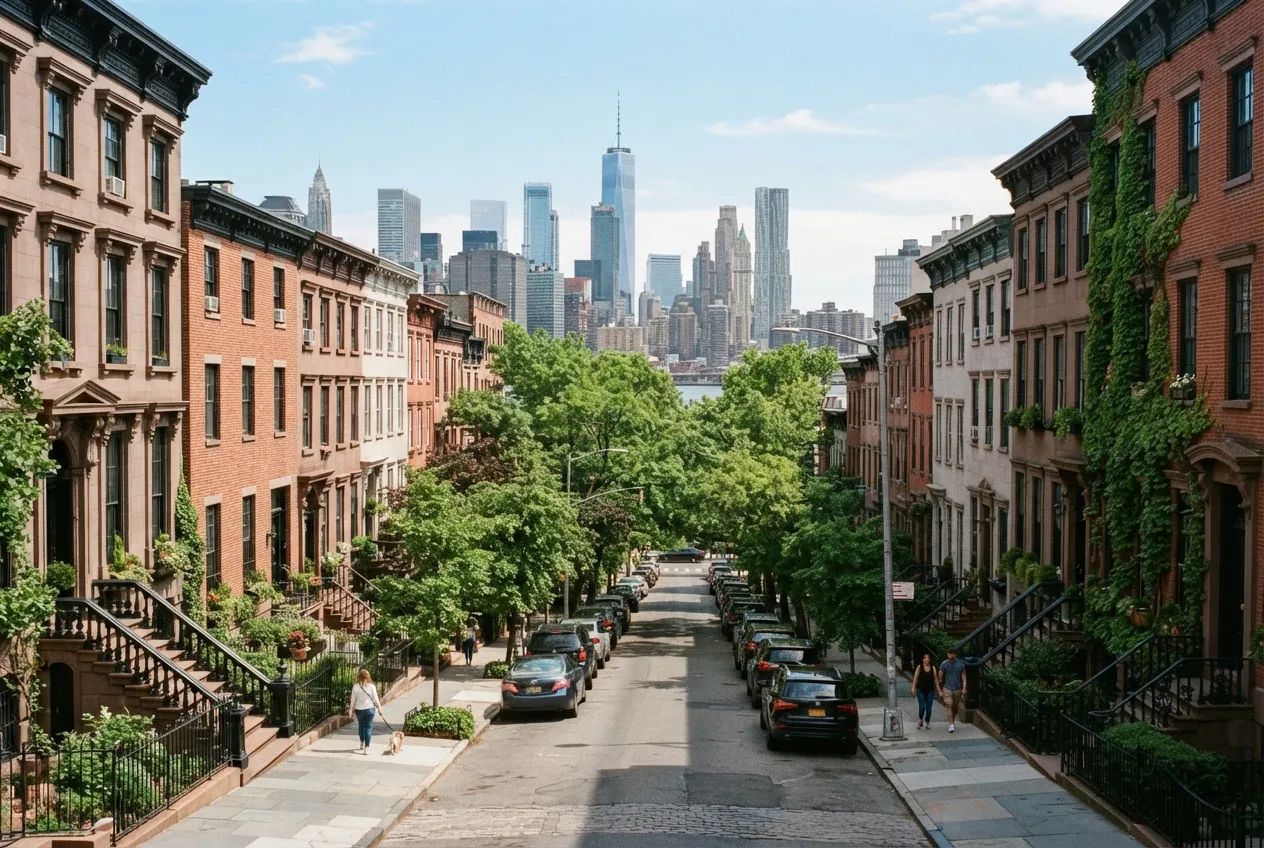
Brooklyn Heights is known for its brownstones, rowhouses and pre-war apartment buildings. Many of these homes still rely on masonry chimneys for a wood-burning fireplace, a gas insert or the boiler in the basement. NorthStar Chimney Services is based in Brooklyn, about a mile from the neighborhood, so our certified technicians can get to you quickly for a routine sweep or for a problem that turns up mid-season. This page explains what a chimney sweep involves for homes like yours and when to book one.
What a Chimney Sweep Includes
A sweep removes soot, creosote and debris from the flue so smoke and exhaust leave the house the way they should. Creosote forms when wood burns. It builds up in layers on the flue walls and can catch fire. Soot and debris from a boiler or furnace can narrow the flue and push exhaust back into the house.
On a typical visit, we:
- Cover the hearth and nearby floors with drop cloths before any work starts
- Brush the flue from the firebox, the roof or both, depending on access
- Run a filtered vacuum to keep soot out of the room
- Clean the smoke shelf, smoke chamber and damper area
- Remove nests, leaves and fallen debris
- Check the damper, firebox, flue liner and visible masonry, and tell you what we found
Chimneys in Brownstones and Rowhouses
Many townhouses in Brooklyn Heights were built with several fireplaces, often one per floor, each with its own flue in a shared chimney stack. Over the years, some of those fireplaces were closed off, some were converted to gas and some were kept for wood. Before we sweep, we work out which flue serves which fireplace. That way the right flue gets cleaned, and we can point out any that look damaged or blocked.
Older masonry also wears in its own ways. Mortar joints can loosen, chimney crowns can crack, and older flues may be unlined or have gaps in the clay liner. A sweep is a good time to catch these problems early, because a clean flue is much easier to examine than one coated in soot.
Boiler and Furnace Flues in Apartment Buildings
In pre-war apartment buildings and many townhouses, the chimney's main job is venting the heating system. These flues collect soot and debris too, so they need regular attention even if nobody has lit a fire in years.
If your building is converting its boiler from oil to gas, the chimney has to be evaluated as part of that work. A new liner is often needed, because gas exhaust produces acidic condensate that can corrode a masonry flue. We can sweep and examine the flue so the owner or board knows its condition before the conversion goes ahead.
When to Schedule a Sweep
The NFPA 211 standard calls for chimneys, fireplaces and vents to be inspected once a year. Whether a flue also needs sweeping depends on what the inspection finds. For a fireplace used regularly through the winter, a yearly sweep is common.
Timing matters in New York City. The city's heat season runs from October 1 through May 31, and building owners must keep apartments heated to the city's minimum temperatures during that time. If you book a sweep and inspection in late summer or early fall, there is time to fix any problem before the boiler runs full time.
Call sooner if you notice any of these signs:
- A smoky smell in the room, especially on humid days
- Smoke drifting into the room instead of going up the flue
- Black flakes or debris falling into the firebox
- Animal sounds or nesting material near the damper
- A fireplace you plan to use again after years without a fire
Working Inside Your Home
Brooklyn Heights homes often have narrow stairs, finished interiors and roofs reached through a hatch. We plan access ahead of time, keep our equipment contained and clean up before we leave. In co-ops and condos, we can coordinate roof access and timing with building management.
If we find something beyond a routine sweep, we explain it in plain terms. Some situations call for a Level 2 inspection, which is used when the system changes or the home is sold. A hidden hazard may require a Level 3 inspection, which means opening part of the chimney or building to reach it.
Nearby Neighborhoods We Serve
Along with Brooklyn Heights, we sweep chimneys in Downtown Brooklyn, DUMBO, Boerum Hill and Fort Greene, and across the river in the Financial District. Many of these areas have the same mix of older masonry homes and apartment buildings, so we take the same careful approach there.
More services in Brooklyn Heights
- Chimney Inspection in Brooklyn HeightsLocal service & repairs
- Chimney Repair in Brooklyn HeightsLocal service & repairs
- Air Duct Cleaning in Brooklyn HeightsLocal service & repairs
- Chimney Liner Installation in Brooklyn HeightsLocal service & repairs