
The short answer
Chimney repair in Brooklyn Heights usually means fixing worn mortar, cracked crowns, leaking flashing, or damaged flue liners in older brownstones, rowhouses, and pre-war buildings. NorthStar Chimney Services inspects first, explains what we find, and repairs the problems that affect safety and water entry.
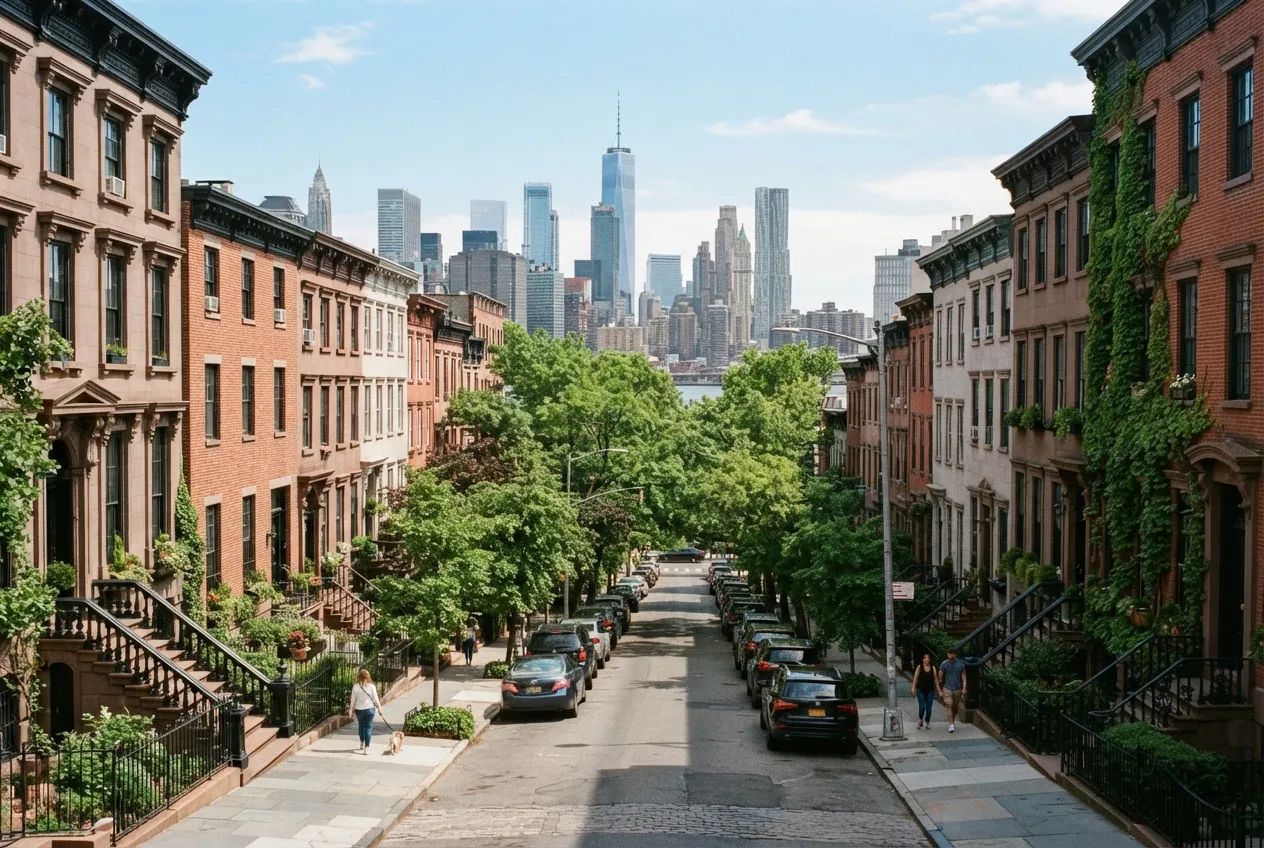
Brooklyn Heights is full of older homes: brownstones, brick rowhouses, and pre-war apartment buildings, many with several flues stacked inside a shared wall and chimneys that rise just above a flat roof. These chimneys have been through decades of weather, heating changes, and renovations, and they wear in predictable ways. NorthStar Chimney Services works from our Brooklyn office, about a mile from the neighborhood. Our certified technicians repair masonry, crowns, flashing, liners, and dampers. Before any work starts, we explain in plain terms what we found, so you can decide what needs fixing now and what can wait.
Common Chimney Problems in Brooklyn Heights Homes
Most chimneys here are brick or stone and were built long before modern heating equipment. Water does most of the damage. It soaks into old mortar, freezes, expands, and slowly pushes joints and bricks apart. On flat roofs, the spot where the chimney meets the roofing is a frequent source of leaks that show up as stains on top-floor ceilings or walls.
Inside the chimney, problems are harder to see. Clay tile liners crack with age or heat, mortar between tiles washes out, and flues that no longer serve a fireplace or boiler can collect debris or animal nests.
- Loose, crumbling, or missing mortar joints
- Cracked or broken chimney crowns that let water into the masonry
- Failed or patched-over flashing at the roofline
- Spalling brick, where the face of the brick flakes or pops off
- Cracked or deteriorated flue liners
- Rusted or stuck dampers and missing chimney caps
How We Approach Repairs on Older Brownstones and Rowhouses
We start with an inspection, because a visible symptom like a leak or loose brick often has a cause somewhere else. The NFPA 211 standard calls for chimneys, fireplaces, and vents to be inspected once a year. A Level 1 inspection fits when nothing has changed. A Level 2 inspection applies when the system changes, such as a new appliance or a switch of fuel, or when the home is sold. A Level 3 inspection is used when a hidden hazard can only be reached by opening part of the chimney or building.
On older masonry we use mortar suited to the existing brick, so the repair moves and breathes with the wall instead of trapping moisture. In rowhouses with shared walls and attached roofs, we plan access carefully and keep work areas clean. When a chimney serves more than one unit in a building, we look at every flue in the stack, not just the one with the complaint.
Oil-to-Gas Conversions and Chimney Liners
Many Brooklyn Heights buildings have switched or are planning to switch their boilers from oil to gas. When a New York City building converts its boiler from oil to gas, the chimney has to be evaluated as part of the work. A new liner is often needed, because gas exhaust produces acidic condensate that can corrode a masonry flue from the inside.
We evaluate the existing flue, confirm whether it is the right size and condition for the new equipment, and install a liner when one is needed. If you are working with a heating contractor on a conversion, we can coordinate so the chimney work fits the project schedule.
Timing Repairs Around Heat Season
New York City's heat season runs from October 1 through May 31. During those months, building owners must keep apartments heated to the city's minimum temperatures. A chimney problem that takes a boiler offline in January is a serious issue for owners and tenants alike.
For that reason, late spring and summer are a practical time for larger repairs like rebuilding a chimney top or relining a flue. If something comes up during heat season, we focus first on getting the system safe and working, then schedule bigger masonry work for better weather when that makes sense.
Chimney Repair Near Brooklyn Heights
Along with Brooklyn Heights, we repair chimneys in nearby Downtown Brooklyn, DUMBO, Boerum Hill, and Fort Greene, and across the river in the Financial District. These areas have similar mixes of rowhouses, converted buildings, and pre-war apartments, so we see many of the same problems and use the same careful approach.
More services in Brooklyn Heights
- Chimney Sweep in Brooklyn HeightsLocal service & repairs
- Chimney Inspection in Brooklyn HeightsLocal service & repairs
- Air Duct Cleaning in Brooklyn HeightsLocal service & repairs
- Chimney Liner Installation in Brooklyn HeightsLocal service & repairs