
The short answer
A chimney sweep removes creosote, soot and debris from your fireplace flue and checks it for damage, and the NFPA 211 standard calls for an inspection once a year. In the Financial District, most chimneys run through multi-story buildings, so we coordinate roof access and building rules ahead of time.
Fireplaces in the Financial District often turn up in places people don't expect: a top-floor unit in a pre-war apartment building, a loft in an older commercial building converted to housing, or a high-floor apartment with a gas insert. These chimneys need regular cleaning like any other, but reaching them takes more planning than a typical house. NorthStar Chimney Services sends certified technicians from our Brooklyn office, about 2 miles away, to sweep and inspect chimneys for owners, co-op and condo residents, and building managers in ZIP codes 10005, 10006, 10038, 10271, 10280 and 10282.
What a Chimney Sweep Includes
A sweep removes soot and creosote from the flue, smoke chamber, smoke shelf and firebox. Creosote is the tarry residue wood smoke leaves behind, and it is what fuels most chimney fires. In apartments and lofts where the fireplace is used only a few evenings a month, buildup can still be heavy, because short, cool fires tend to produce more of it.
Gas fireplaces and inserts need attention too. They don't leave creosote, but vents can collect debris, and a damaged cap or liner can affect how exhaust leaves your home.
- Brushing the full length of the flue from the firebox, the roof, or both
- Cleaning the smoke shelf and smoke chamber, where debris collects
- Vacuuming with HEPA filtration so soot stays out of the room
- Checking the damper, cap and crown for damage or blockage
- Photos of anything that needs attention, explained in plain terms
Working in Pre-War and Converted Buildings
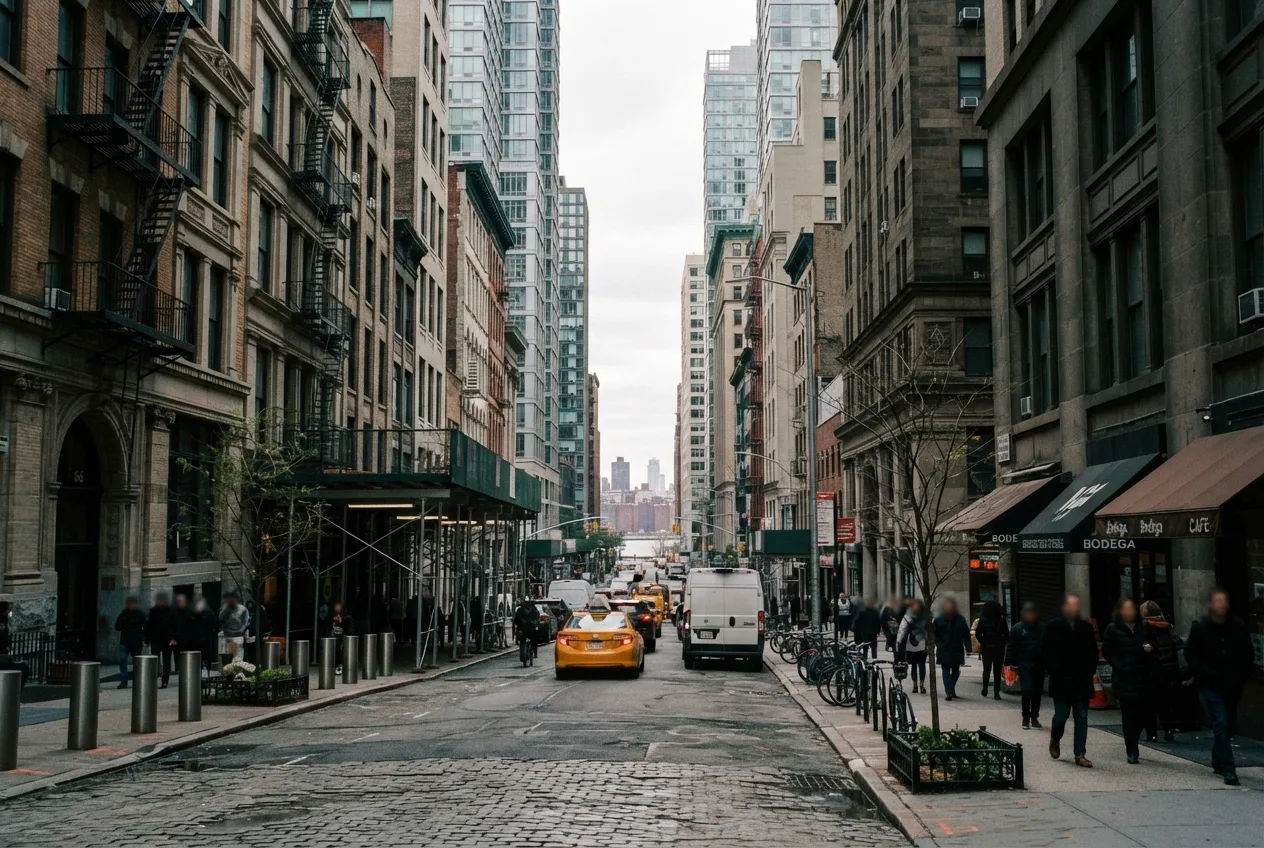
Most Financial District homes are in multi-story buildings, so a fireplace flue often runs many floors up to the roof, sometimes beside other flues or the building's boiler flue. That length matters. More surface means more places for creosote and debris to settle, and a blockage near the top can push smoke back into the unit.
We plan these visits around the building. That usually means confirming roof access with the super or managing agent, reserving a service elevator if one is required, and putting down drop cloths and plastic before any brushing starts. If your building has specific vendor requirements, tell us when you book so we can sort them out before the visit.
When to Schedule a Sweep
The NFPA 211 standard calls for chimneys, fireplaces and vents to be inspected once a year. For a wood-burning fireplace, the simplest habit is to book a sweep and inspection in late summer or early fall, before you light the first fire.
Building owners have another reason to plan ahead. New York City's heat season runs from October 1 through May 31, when apartments must be kept at the city's minimum temperatures. A boiler flue problem found in January is much harder to deal with than one found in September. Don't wait for the annual visit if you notice any of these signs:
- Smoke drifting into the room instead of going up the flue
- A strong campfire or tar smell, especially in humid weather
- Black flakes or debris falling into the firebox
- Animal sounds or nesting material near the damper
- A fireplace that hasn't been used or checked in years
Inspection Levels and Oil-to-Gas Conversions
Every sweep includes a look at the chimney's condition. Chimney professionals use three inspection levels. Level 1 fits when nothing has changed. Level 2 applies when the system changes, such as a new appliance or a switch of fuel, or when the home is sold, which comes up often with co-op and condo sales. Level 3 is for hidden hazards that can only be reached by opening part of the chimney or building.
If your building is converting its boiler from oil to gas, the chimney has to be evaluated as part of the work. A new liner is often needed, because gas exhaust produces acidic condensate that can corrode a masonry flue. We can sweep the old flue, inspect it, and explain whether relining makes sense before the new equipment goes in.
Nearby Areas We Serve
Our office is in Brooklyn, about 2 miles from the Financial District, so we also work regularly in Brooklyn Heights, Downtown Brooklyn, DUMBO, Boerum Hill and Carroll Gardens. Those neighborhoods have more brownstones and rowhouses, but every sweep and inspection follows the same standards.
More services in Financial District
- Chimney Inspection in Financial DistrictLocal service & repairs
- Chimney Repair in Financial DistrictLocal service & repairs
- Air Duct Cleaning in Financial DistrictLocal service & repairs
- Chimney Liner Installation in Financial DistrictLocal service & repairs