
The short answer
A chimney sweep removes soot, creosote and debris from your fireplace and flue so it can vent smoke safely. For DUMBO homes, schedule a sweep and inspection once a year, ideally before New York City's heat season begins on October 1. Our certified technicians clean the full flue path and explain anything that needs attention.
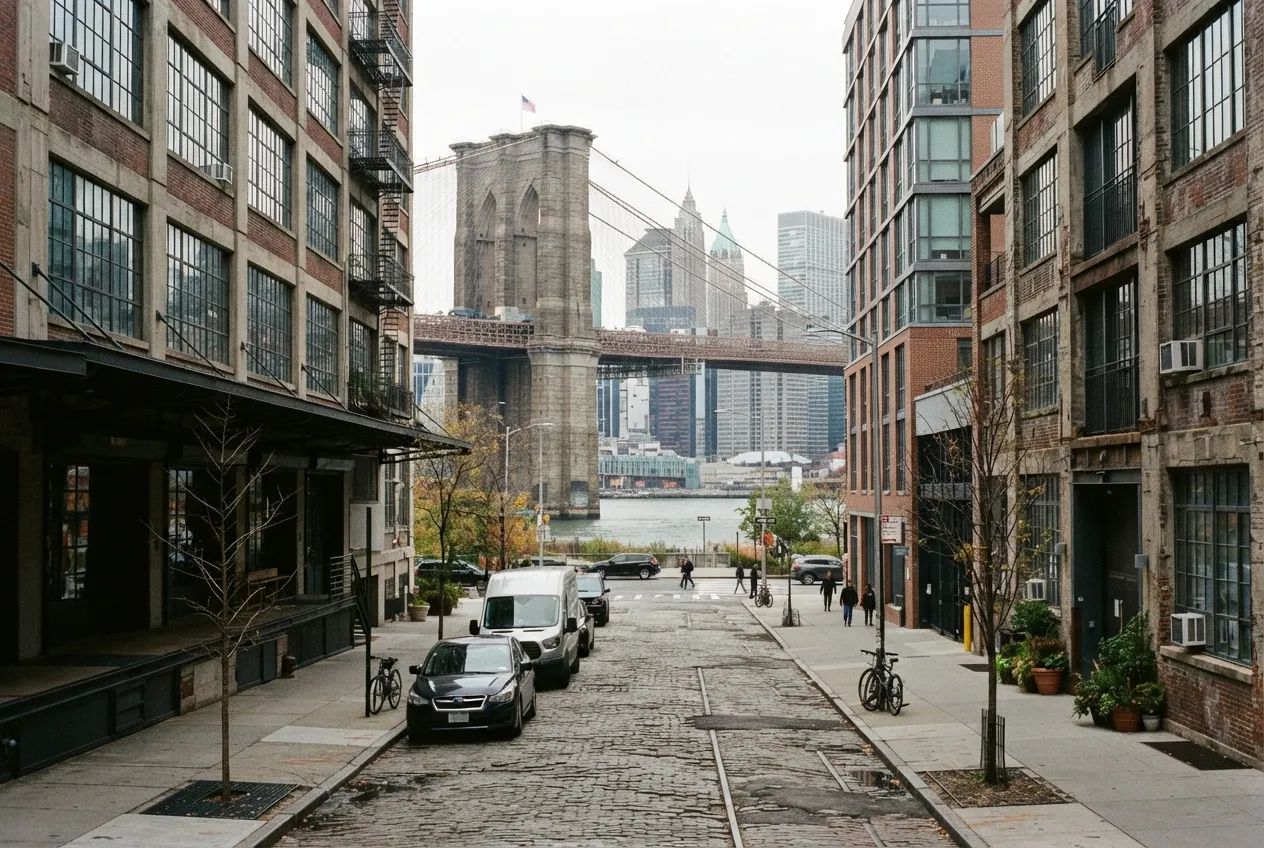
NorthStar Chimney Services sweeps chimneys and fireplace flues for homes in DUMBO, about 2 miles northeast of our Brooklyn office. Many DUMBO residences are in converted industrial and pre-war buildings, where a fireplace or flue may have been added, rebuilt or left unused for years. A sweep removes the soot and creosote that build up inside a flue. It also gives our certified technicians a close look at the liner, damper and smoke chamber. Below is what a sweep involves, when to schedule one, and what we watch for in buildings like yours.
What a Chimney Sweep Covers
A sweep cleans the full flue path, not just the firebox. We cover the floor and furniture around the hearth and seal off the fireplace opening. Then we use brushes and rods sized to your flue to loosen deposits from the firebox up through the smoke chamber and liner. We collect the loose debris with a vacuum built for fine soot, so it doesn't drift into your living space.
- Firebox, damper and smoke shelf cleaned of soot and creosote
- Flue brushed top to bottom with tools matched to its size and shape
- Debris and nesting material removed
- Visual check of the liner, damper, chimney cap and crown where they can be reached
- A plain-language explanation of what we found and any repairs worth considering
Chimneys in DUMBO Homes
Housing in DUMBO ranges from converted loft buildings and pre-war apartment buildings to a smaller number of rowhouses and newer buildings. Flues vary just as widely. Some loft units have fireplaces that were installed during a conversion. Others share masonry chimneys that have served several appliances over the building's life. Older masonry flues may have unlined sections, cracked clay tiles or mortar joints worn down with age.
In apartment buildings, a sweep may require roof access arranged through building management or the super. We can coordinate scheduling with them so the work can be done safely from both the hearth and the roof when needed.
When to Schedule a Sweep
The NFPA 211 standard calls for chimneys, fireplaces and vents to be inspected once a year. If the inspection shows buildup, the sweep is often done at the same visit. For wood-burning fireplaces, how often you need a sweep depends on how much you burn and what you burn. Seasoned hardwood leaves fewer deposits than damp wood or softwood.
New York City's heat season runs from October 1 through May 31. A sweep in late summer or early fall lets you start the season with a clean, checked flue, before the busier weeks that come with cold weather.
- You see black, flaky or glazed deposits inside the firebox or around the damper
- Smoke drifts into the room instead of drawing up the chimney
- A strong campfire or tar smell comes from the fireplace, especially in humid weather
- You've moved in and don't know when the chimney was last cleaned
- Birds, animals or debris may have gotten in from the top
Inspection Levels and Fuel Changes
Chimney professionals use three inspection levels. Level 1 fits when nothing about the system has changed. Level 2 applies when the system changes, such as a new appliance or a switch of fuel, or when the home is sold. Level 3 is used when a hidden hazard has to be reached by opening part of the chimney or building.
Fuel changes matter in older Brooklyn buildings. When a New York City building converts its boiler from oil to gas, the chimney has to be evaluated as part of the work. A new liner is often needed, because gas exhaust produces acidic condensate that can corrode a masonry flue. If your building has converted or plans to, tell us so we can look at the flue with that in mind.
What Happens After the Sweep
Once the flue is clean, we walk you through what we saw. If everything is in order, you'll know the fireplace is ready to use. If we find cracked tiles, a damaged damper, a missing cap or a worn crown, we explain the problem, show you photos where we can, and lay out your options. We serve DUMBO in ZIP code 11201, along with nearby Downtown Brooklyn, Boerum Hill, Brooklyn Heights, Fort Greene and Carroll Gardens.
More services in DUMBO
- Chimney Inspection in DUMBOLocal service & repairs
- Chimney Repair in DUMBOLocal service & repairs
- Air Duct Cleaning in DUMBOLocal service & repairs
- Chimney Liner Installation in DUMBOLocal service & repairs