
The short answer
NorthStar Chimney Services repairs chimneys in Carroll Gardens from our office at 373 Columbia St. We fix worn mortar, cracked crowns, leaking flashing and failing flue liners on brownstones, rowhouses and pre-war buildings. Each job starts with an inspection so the repair targets the real cause.
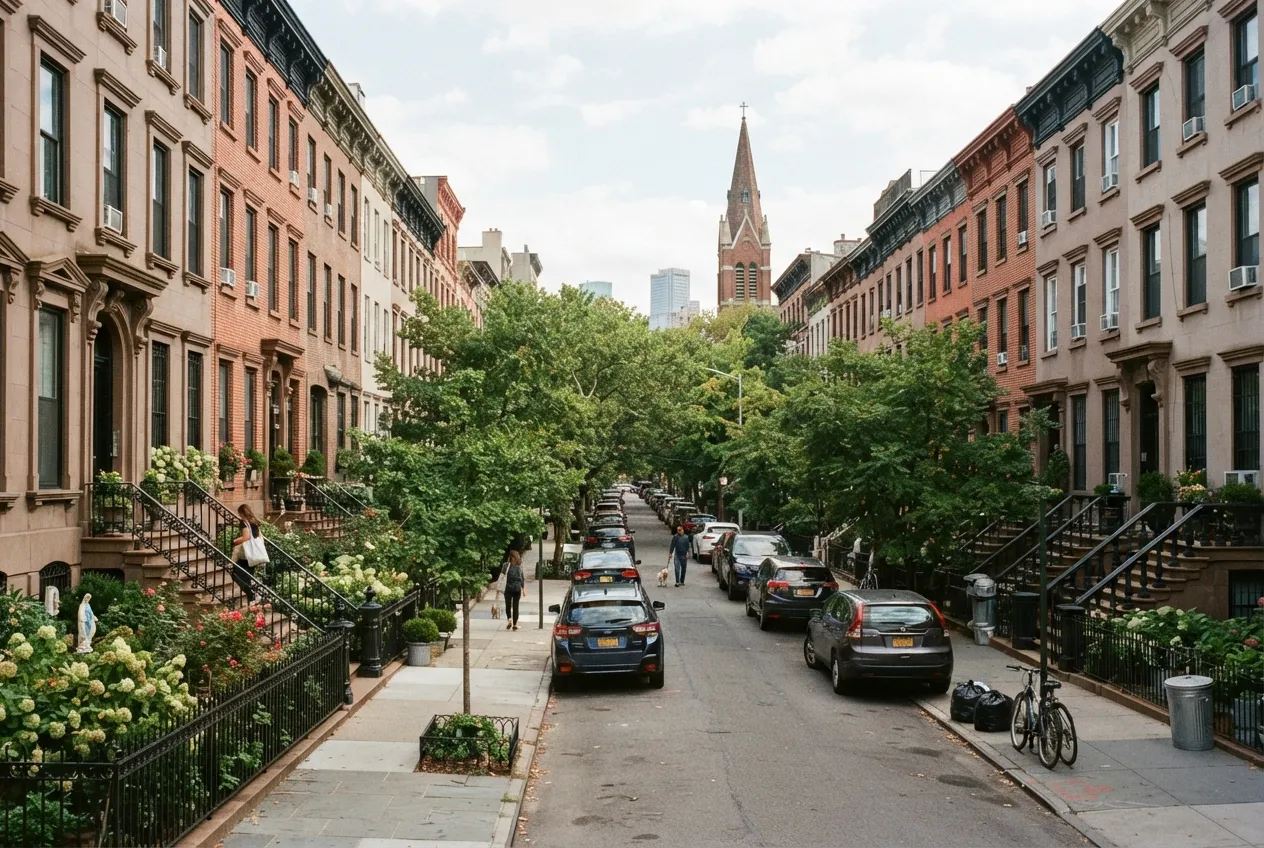
Carroll Gardens is where NorthStar Chimney Services is based, with our office at 373 Columbia St. Most chimneys here are brick and have been through decades of Brooklyn winters, years of coal and oil heat, and roof work done by many different hands. When mortar washes out, a crown cracks or a flue liner fails, water and exhaust start going where they shouldn't. Our certified technicians repair chimneys on brownstones, rowhouses, pre-war apartment buildings and the occasional detached home across ZIP code 11231. We explain what we find before any work starts.
Why Chimneys in Carroll Gardens Need Repair
Much of the housing here is older masonry. Brownstone and brick rowhouses have chimneys that run up through shared walls, and pre-war apartment buildings have tall flues serving a boiler. These chimneys were built well, but brick and mortar don't last forever. Water does most of the damage. It soaks into worn joints and cracked crowns, freezes, expands and pushes the masonry apart a little more each winter.
Rowhouse chimneys add another complication. A single stack can hold more than one flue. It often sits on a flat roof that collects water, and the flashing around it may have been patched several times. A small leak at the top can show up as a stained ceiling or peeling paint two floors down.
- Crumbling or missing mortar between bricks
- A cracked or broken chimney crown
- Water stains on ceilings or walls near the chimney
- Rust on the damper or inside the firebox
- Pieces of tile or masonry falling into the fireplace or cleanout
- White staining on the outside brick
- A chimney that appears to lean
Chimney Repairs We Handle
We aim to fix the cause of the problem, not just the part you can see. Common repairs include:
If a repair isn't needed, we'll tell you. Sometimes a new cap or a sealed crown solves what looked like a much bigger problem.
- Repointing: removing failed mortar and replacing it with new mortar
- Crown repair or rebuilding so water sheds away from the flue
- Installing or replacing chimney caps to keep out rain, debris and animals
- Flashing repair where the chimney meets the roof
- Flue liner repair and relining for fireplaces, boilers and water heaters
- Damper repair or replacement, including top-sealing dampers
- Firebox and smoke chamber repairs
- Partial rebuilds above the roofline when brick is too far gone to patch
Oil-to-Gas Conversions and Flue Liners
Many Brooklyn buildings have switched their boilers from oil to gas. In New York City, the chimney has to be evaluated as part of that conversion, and a new liner is often needed. Gas exhaust produces acidic condensate, which can corrode an old masonry flue from the inside over time.
If you're planning a conversion, or you finished one and never had the chimney checked, we can inspect the flue. We'll tell you whether the existing liner suits the new appliance and install a properly sized liner if it doesn't.
Plan Repairs Around Heat Season
New York City's heat season runs from October 1 through May 31. During those months, building owners must keep apartments heated to the city's minimum temperatures, so a boiler flue problem in January can't wait. If you own a rowhouse with tenants or a small multifamily building, late spring and summer are the easiest times to schedule liner work or masonry repairs.
The NFPA 211 standard calls for chimneys, fireplaces and vents to be inspected once a year. A yearly inspection is the simplest way to catch mortar loss, crown cracks and liner damage while they're still small repairs.
What to Expect From a Repair Visit
Most repairs start with an inspection, and chimney professionals use three levels. A Level 1 inspection is used when nothing about the system has changed. A Level 2 inspection is called for when the system changes, such as a new appliance or a switch of fuel, or when the home is sold. A Level 3 inspection is used when a hidden hazard can only be reached by opening part of the chimney or building.
After the inspection, we explain in plain terms what we found, what needs fixing now, what can wait and what the work involves. We protect floors and furnishings near the fireplace and clean up when the job is done.
Serving Carroll Gardens and Nearby Neighborhoods
Our office is on Columbia Street, so Carroll Gardens and the rest of 11231 are close by. We also repair chimneys in Cobble Hill, Gowanus, Red Hook, Park Slope and Brooklyn Heights. Many homes in those neighborhoods are the same kind of brownstones, rowhouses and older apartment buildings, and their chimneys wear in the same ways.
More services in Carroll Gardens
- Chimney Sweep in Carroll GardensLocal service & repairs
- Chimney Inspection in Carroll GardensLocal service & repairs
- Air Duct Cleaning in Carroll GardensLocal service & repairs
- Chimney Liner Installation in Carroll GardensLocal service & repairs