
The short answer
Many older Carroll Gardens chimneys are unlined or have cracked clay tiles, and a new liner is often needed when a boiler is converted from oil to gas or an appliance is replaced. NorthStar Chimney Services inspects the flue, sizes a liner to your appliance and installs it from our local office on Columbia St.
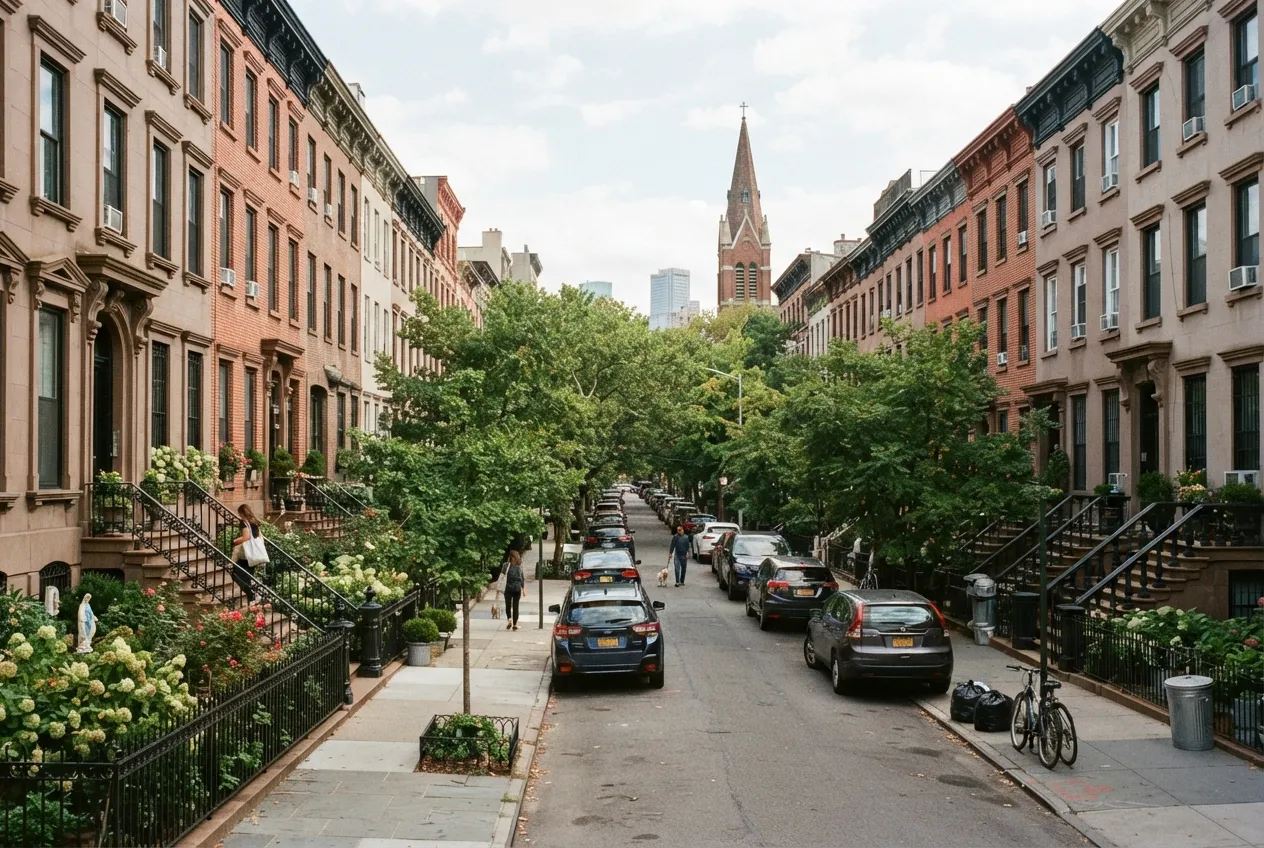
Carroll Gardens is full of brownstones, brick rowhouses and pre-war apartment buildings, and many of them still rely on masonry chimneys built long before today's boilers, furnaces and water heaters. A chimney liner protects that masonry from heat and exhaust and helps your appliance vent the way it should. NorthStar Chimney Services installs liners for homes and small buildings across ZIP code 11231 from our office at 373 Columbia St. That means we're already in the neighborhood when you need an inspection, a measurement or the installation itself.
Why Older Carroll Gardens Chimneys Need Liners
Many chimneys in older Brooklyn homes were built as unlined brick or with clay tiles that have since cracked, shifted or lost mortar. An unlined or damaged flue lets heat reach wood framing. It lets exhaust gases seep into walls and living space. It also leaves the masonry exposed to moisture and corrosion.
A properly sized liner gives exhaust a sealed, continuous path from the appliance to the top of the chimney. This matters whether the flue serves a wood-burning fireplace on a parlor floor, a gas boiler in the basement, or a water heater that shares the same chimney.
Oil-to-Gas Conversions and New Appliances
Boiler conversions are one of the most common reasons we install liners in this part of Brooklyn. When a New York City building converts its boiler from oil to gas, the chimney has to be evaluated as part of the work, and a new liner is often needed. Gas exhaust produces acidic condensate. Over time, that moisture can corrode a masonry flue that was never designed for it.
The same applies when you replace a boiler or furnace with a newer, more efficient model. Newer appliances often send cooler exhaust up the chimney. A flue that is too large, or made of the wrong material, may not draft properly. Matching the liner to the appliance is part of doing the job correctly. Common reasons homeowners call us include:
- Converting a boiler from oil to gas
- Replacing a boiler, furnace or water heater
- Reopening a fireplace that hasn't been used in years
- Cracked or missing clay tiles found during an inspection
- Signs of exhaust in living space or water damage around the chimney
How a Liner Installation Works
Liner work starts with an inspection. Under the NFPA 211 standard, a change to the system, such as a new appliance or a switch of fuel, calls for a Level 2 inspection. That usually includes a camera look inside the flue. If a hidden problem can only be reached by opening part of the chimney or a wall, that's a Level 3 inspection. We'll explain why it's needed before anything is opened.
From there, our certified technicians measure the flue and recommend a liner type and size based on the appliance it will serve. On a typical installation we:
- Clean the existing flue and remove loose debris
- Measure the flue's height, offsets and opening
- Install the liner from the roof down and connect it to the appliance
- Cap the top and confirm the system drafts properly
- Walk you through what we found and what we did
Working in Brownstones, Rowhouses and Apartment Buildings
Attached brownstones and rowhouses come with their own challenges. Party walls are shared, chimneys may serve more than one unit, roof access can be narrow, and neighbors are close by. We plan roof access ahead of time, protect floors and finishes inside, and keep the work area contained. In multi-unit pre-war buildings, we coordinate with owners and building managers so tenants know what to expect.
Timing matters too. New York City's heat season runs from October 1 through May 31. During that period, building owners must keep apartments heated to the city's minimum temperatures. If your boiler's venting needs a new liner, scheduling the work before the cold months helps avoid a cold building. If the work has to happen during heat season, careful planning keeps downtime to a minimum.
Serving Carroll Gardens and Nearby Neighborhoods
Because our office is in Carroll Gardens, we also serve nearby Cobble Hill, Gowanus, Red Hook, Park Slope and Brooklyn Heights. Many homes in these neighborhoods have the same kinds of older masonry chimneys.
After a liner is installed, keep up with yearly inspections. NFPA 211 calls for chimneys, fireplaces and vents to be inspected once a year. When nothing has changed, a Level 1 inspection is usually all that's needed.
More services in Carroll Gardens
- Chimney Sweep in Carroll GardensLocal service & repairs
- Chimney Inspection in Carroll GardensLocal service & repairs
- Chimney Repair in Carroll GardensLocal service & repairs
- Air Duct Cleaning in Carroll GardensLocal service & repairs